

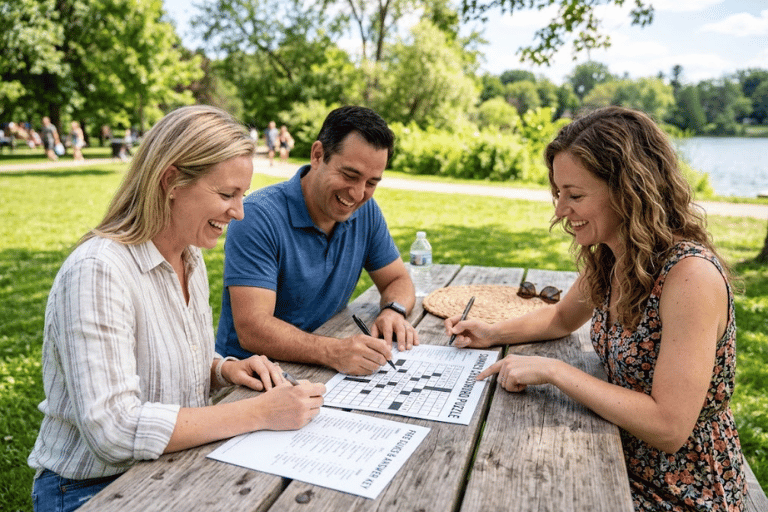
A summer crossword puzzle turns familiar warm-weather words into an easy activity for kids, families, campers, and classrooms. Use the clues below at home, during summer school, or on a road trip. The included answers also make it quick for parents and teachers to check the activity.
| Quick Detail | Information |
|---|---|
| Theme | Summer activities, weather, food, travel, and outdoors |
| Number of answers | 20 |
| Best for | Kids, families, classrooms, camps, and road trips |
| Suggested age | About 7 years and older |
| Difficulty | Easy to medium |
| Materials | Printed puzzle or paper, pencil, and answer key |
| Skills practiced | Vocabulary, spelling, reading, recall, and problem-solving |
| Best U.S. print size | 8.5 × 11-inch Letter paper |
Direct answer: This summer-themed activity uses clues about beaches, vacations, outdoor fun, food, and sunny weather. Most answers are familiar enough for elementary-age solvers, while several require careful thinking. Parents and teachers can add a word bank for beginners or remove it for a harder challenge.
20 Summer Crossword Puzzle Clues to Try
The clue set below covers familiar American summer experiences without relying on obscure vocabulary. Younger children can solve it with a word bank, while older players can work from clues alone. You can also divide the answers between “Across” and “Down” when building a printable grid.
Across Clues
1. A sandy place beside an ocean or lake. 2. A cold dessert often served in a cone. 3. A sweet drink made with lemons, sugar, and water. 4. Something you wear to shade your eyes from bright sunlight. 5. A meal eaten outdoors, often in a park. 6. A structure made from wet sand near the water. 7. A place filled with water where people swim. 8. A portable shelter commonly used while camping. 9. A large green fruit with a red center. 10. A trip taken while school or work is on break.
Down Clues
1. Lotion used to help protect skin from the sun. 2. Shoes with open toes that are popular in warm weather. 3. A frozen treat commonly served on a stick. 4. An outdoor cooking method that usually uses a grill. 5. A water activity that involves moving through a pool, lake, or ocean. 6. A moving ridge of water that reaches the shore. 7. A machine or lawn device that sprays water. 8. Protective glasses worn on bright days. 9. An outdoor activity that often includes sleeping in a tent. 10. A small hard object sometimes collected along a beach.
Answer Key
The answers use common U.S. spellings and familiar seasonal terms. Multiword answers can be entered without spaces if your grid requires continuous letters. A teacher can keep this section separate when distributing the activity.
| Clue Group | Number | Answer |
|---|---|---|
| Across | 1 | Beach |
| Across | 2 | Ice cream |
| Across | 3 | Lemonade |
| Across | 4 | Hat |
| Across | 5 | Picnic |
| Across | 6 | Sandcastle |
| Across | 7 | Pool |
| Across | 8 | Tent |
| Across | 9 | Watermelon |
| Across | 10 | Vacation |
| Down | 1 | Sunscreen |
| Down | 2 | Sandals |
| Down | 3 | Popsicle |
| Down | 4 | Barbecue |
| Down | 5 | Swimming |
| Down | 6 | Wave |
| Down | 7 | Sprinkler |
| Down | 8 | Sunglasses |
| Down | 9 | Camping |
| Down | 10 | Seashell |
Why Summer Crosswords Work Well for Kids
Crosswords make children connect a definition with a word they already know or can infer. That process exercises reading comprehension, spelling, and word recall at the same time. A seasonal theme keeps the vocabulary familiar and reduces frustration for developing readers.
The activity also works without screens, accounts, batteries, or complicated setup. A printed sheet and pencil can fill a quiet period during travel or a hot afternoon indoors. Families can even solve the clues together when younger children need occasional hints.
Teachers can connect the activity with seasonal vocabulary lessons or end-of-year review. A clue about sunscreen can lead into sun-safety vocabulary, while camping terms can support nature lessons. Visit Publishie’s Education section for more learning-focused reading.
Make the Puzzle Easier for Younger Solvers
A word bank is the simplest way to reduce difficulty without changing the clues. Children still have to match each definition with the correct answer and fit the letters correctly. That gives them support while preserving the problem-solving part of the activity.
You can also complete the first answer together, then ask the child to continue alone. Another option is revealing the first letter of difficult words such as “sandcastle” or “sunscreen.” These small hints prevent one hard clue from stopping the entire game.
For early readers, choose ten shorter answers instead of all twenty. Words such as sun, hat, pool, tent, and wave are easier to recognize and spell. Longer vocabulary can be introduced after the solver gains confidence.
Make It Harder for Older Kids and Adults
Remove the word bank first because this forces players to retrieve each answer from the clue. You can then rewrite simple definitions so they require an extra inference. For example, “Cold summer dessert in a cone” can replace a direct clue for ice cream.
Another method is setting a reasonable time challenge for a group. Players can compare completed answers after time expires instead of racing through every clue carelessly. This creates friendly competition without making the activity depend entirely on speed.
Older players can also write five new clues after finishing the original set. That task reverses the thinking process because they must define an answer without naming it. Creating clues often proves harder than solving them.
Ways to Use a Summer Crossword at Home or School
A summer crossword puzzle fits several settings because it requires little preparation. Print copies before the occasion rather than searching for an activity after children become restless. Keep pencils and a few spare sheets with the puzzles.
Useful situations include the following.
* Summer school warm-ups * Last-week-of-school activities * Family road trips * Airplane travel * Summer camp quiet periods * Rainy afternoons * Library programs * Restaurant waiting time * Homeschool vocabulary practice * Family game nights
Road trips are especially suitable because a paper puzzle works without cellular service. A clipboard gives children a firm writing surface inside a car. Parents can keep the answer key separately to avoid accidental peeking.
Camp counselors can use the same clues for a small-group challenge. Teams can discuss possible answers before filling the spaces, which adds a cooperative element. Readers looking for more light recreational content can also browse Publishie’s Entertainment section.
Turn the Clues Into a Personalized Activity
The easiest customization is replacing several answers with words connected to your plans. A beach vacation might add boardwalk, lifeguard, surfboard, or lighthouse. A camping trip could use canoe, campfire, trail, lantern, and cabin.
Teachers can personalize the vocabulary around material students recently studied. For example, a science class could combine seasonal words with weather, insects, plants, and water-cycle terms. The seasonal theme stays recognizable while the clues reinforce classroom knowledge.
Families can make the puzzle personal by including destinations, traditions, or favorite foods. A yearly lake trip or backyard barbecue can inspire clues that children recognize immediately. That turns a basic word activity into a small record of family memories.
Printing Tips for U.S. Letter Paper
Most U.S. home and school printers use Letter paper measuring 8.5 by 11 inches. Choose “Actual Size” or 100% when a completed grid has already been formatted for that page. Automatic scaling can make small crossword squares harder to write inside.
Print one test copy before producing a classroom set. Check whether clue text is readable and confirm that no row of the grid reaches the page edge. Black-and-white printing usually works well because a crossword does not need color to function.
If children will use the sheet during travel, consider printing on slightly heavier paper. A clipboard or hard folder also gives the page more support. Keep the answer page separate until everyone finishes.
Easy Ways to Turn Solving Into Learning
Ask children to use three completed answers in original sentences after they finish. This extends the activity from recognition into practical vocabulary use. It also shows whether they understand each word beyond its spelling.
Another option is asking solvers to sort answers into categories. They might create groups for food, clothing, places, activities, and weather-related items. Classification encourages children to look for relationships between words.
You can also ask students to choose one answer and write a short summer memory about it. A word such as “picnic” or “vacation” can provide an easy writing prompt. Publishie’s Gaming section offers additional recreational topics for readers interested in games and interactive entertainment.
Frequently Asked Questions
What age is a summer crossword puzzle suitable for?
A summer crossword puzzle can work for children around age seven and older, as long as the clues use familiar vocabulary. Younger solvers usually benefit from a word bank or adult help. Older children can use harder clues and longer answers.
Should kids get a word bank?
A word bank helps beginning readers focus on matching meanings instead of recalling every spelling independently. It works well for elementary students and English learners. Remove the bank when you want a stronger vocabulary challenge.
Can adults use the same clues?
Adults can use the same theme, but many of these clues will feel easy. Rewrite definitions with wordplay, indirect meanings, or less obvious seasonal vocabulary. You can also add longer answers for a more demanding grid.
Is a crossword useful during summer break?
Yes, because it gives children a short reading and vocabulary activity without feeling like a formal worksheet. It can fit naturally into travel, camp, or quiet time. A brief puzzle also keeps a relaxing day from turning into a long lesson.
Can I create my own summer clues?
Yes, and personalized clues often make the activity more engaging. Start with a list of summer words, then write one clear definition for each answer. Test the clues on another person before building the final grid.
A Simple Summer Activity Worth Keeping Nearby
Seasonal word games work because they combine familiar ideas with a manageable mental challenge. This clue set covers beaches, food, travel, outdoor activities, clothing, and warm-weather routines. You can adjust its difficulty without replacing the whole activity.
Print a copy for your next road trip, camp session, classroom break, or quiet afternoon. Add a word bank for beginners or rewrite clues for experienced solvers. Small changes can make the same activity useful for several ages and settings.
For more general reading, games, education, and entertainment topics, explore the Publishie homepage. Save this activity before summer starts so you have a screen-free option ready. It takes little preparation and can be reused with fresh clues throughout the season.