
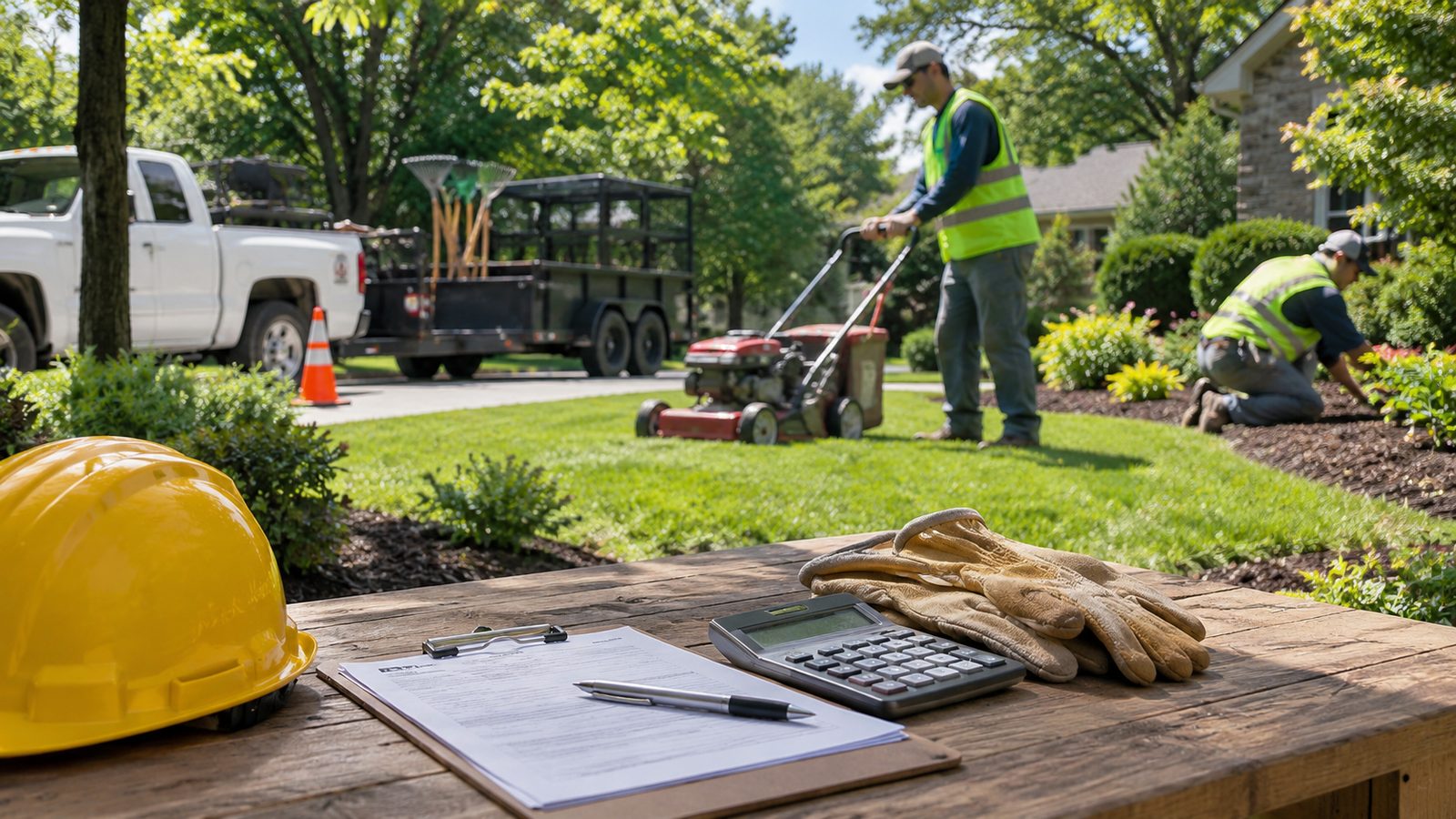
Running a landscaping company means working around vehicles, machinery, client property, chemicals, and changing jobsite conditions. Business insurance for landscaping helps protect your company when those everyday risks become expensive claims. The right coverage mix depends on your services, employees, vehicles, equipment, contracts, and state rules. Quick answer: Landscaping companies commonly need general liability, commercial auto, equipment coverage, and workers’ compensation when they employ workers. Businesses using pesticides may need specialized pollution or applicator protection. Costs vary widely because insurers consider payroll, vehicles, services, equipment values, claims history, and location.
Landscaping Insurance at a Glance
| Coverage | Main purpose | Often relevant when |
|---|---|---|
| General liability | Third-party injuries and property damage | Working at customer properties |
| Workers’ compensation | Employee work injuries and illnesses | Employing field workers |
| Commercial auto | Business vehicle accidents and damage | Using trucks or vans for work |
| Tools and equipment | Mobile tools and machinery | Moving equipment between jobs |
| Commercial property | Buildings and stored business property | Owning or leasing a shop |
| Pollution or applicator coverage | Chemical-related claims | Applying pesticides or herbicides |
| Professional liability | Advice or design errors | Providing landscape design services |
| Commercial umbrella | Higher liability limits | Larger contracts or higher exposures |
Why Landscaping Businesses Face Special Insurance Risks
Landscaping combines several exposures that many office-based businesses never encounter. Crews may use mowers, saws, trenchers, chemicals, trailers, and heavy materials during one working day. OSHA identifies machinery, chemicals, vehicles, lifting, weather, noise, and falls among common landscaping hazards. A small incident can create a costly chain of problems. A mower could throw debris through a customer’s window, while a trailer accident could injure another driver. An employee might also suffer a serious cut, lifting injury, or heat-related illness. The exact risk changes with the work your company performs. Tree care, hardscaping, irrigation, chemical application, and basic mowing do not present identical exposures. Your policy descriptions should accurately reflect every service you offer.
What Business Insurance for Landscaping Usually Covers
General Liability Insurance
General liability is a common starting point for landscapers because crews regularly work on property belonging to others. It can cover qualifying third-party bodily injury, property damage, and certain advertising-related claims. For example, coverage may respond when a mower damages a customer’s window. Insureon reports a current median general liability cost of about $63 per month for its landscaping customers. Most of those customers select $1 million per occurrence and $2 million aggregate limits. Your premium may differ because insurers evaluate operations, revenue, limits, employees, and other factors. General liability is not designed to cover every landscaping loss. Chemical pollution, employee injuries, professional mistakes, and commercial vehicle accidents may require separate protection. Policy exclusions matter as much as the coverage shown on the declarations page.
Workers’ Compensation Insurance
Landscaping employees can face cuts, strains, heat exposure, chemical contact, and vehicle-related injuries. Workers’ compensation can cover qualifying medical expenses and lost wages after job-related injuries or illnesses. It can also provide employer liability protection under applicable policy terms. Requirements differ by state, employee count, business structure, and other factors. Never assume a rule from another state applies to your company. Check your state insurance or labor authority before hiring workers. Insureon currently reports about $150 per month as the average workers’ compensation premium for its landscaping customers. Payroll, job classifications, location, and claims experience can change that figure considerably.
Commercial Auto Insurance
Landscapers frequently drive trucks, vans, trailers, and other vehicles between customer properties. A personal auto policy may not properly cover a vehicle owned or regularly used by the business. Commercial auto insurance is designed for business driving exposures. Coverage can address liability after qualifying accidents and may protect insured vehicles from covered physical damage. Limits, deductibles, drivers, vehicle types, and driving records affect the premium. Insureon reports an average of roughly $299 per month for commercial auto among its landscaping customers. Vehicle ownership deserves special attention because crews may tow expensive equipment every day. Publishie readers researching vehicles can also browse the site’s Automobile section for broader automotive information. Insurance decisions, however, should be based on commercial use rather than personal vehicle assumptions.
Tools and Equipment Coverage
A landscaping company may carry thousands of dollars in mowers, blowers, trimmers, saws, generators, and hand tools. Commercial property insurance often focuses on property at a listed business location. Mobile equipment can require inland marine or contractors’ equipment coverage. This protection may help when covered equipment is stolen, damaged, or lost while traveling or sitting at a jobsite. Policy limits and valuation methods deserve close attention before purchase. Some expensive items may need to be listed individually. Insureon reports an average tools and equipment premium near $53 per month for its landscaping customers. Equipment value, storage methods, age, and mobility can affect pricing.
Extra Coverage Some Landscaping Companies Need
Basic mowing companies and full-service landscape contractors do not always need identical insurance programs. Companies should match coverage to their real operations rather than buying a generic package. This approach can expose gaps before a claim occurs. Consider these additional coverages when they match your work:
* Pollution or pesticide applicator coverage: Useful for businesses applying herbicides, pesticides, fertilizers, or other chemicals. * Professional liability: Relevant when you provide paid landscape plans, specifications, or professional design advice. * Commercial property: Protects qualifying buildings, contents, and stored business property from covered losses. * Business interruption: May replace certain lost income after a covered property event interrupts operations. * Commercial umbrella: Adds liability capacity above qualifying underlying policies. * Hired and non-owned auto: May address liability involving rented vehicles or employee-owned vehicles used for company business.
Chemical operations deserve particular review because standard policies may contain pollution exclusions. NerdWallet notes that landscapers using chemicals may need environmental liability or another specialized option. Your agent should confirm the exact endorsement or policy required for your services.
How Much Does Landscaping Business Insurance Cost?
There is no single national price that applies to every landscaping company. Insurer and broker figures vary because customer profiles, limits, locations, and policy combinations differ. Treat published averages as planning benchmarks rather than quotes.

| Policy | Published benchmark | Source context |
|---|---|---|
| General liability | About $63/month | Insureon landscaping customers |
| Workers’ compensation | About $150/month | Insureon landscaping customers |
| Tools and equipment | About $53/month | Insureon landscaping customers |
| Commercial auto | About $299/month | Insureon landscaping customers |
| Commercial umbrella | About $92/month | Insureon landscaping customers |
These figures reflect recent policies bought through one brokerage and should not predict your final premium. Other 2026 studies publish materially different numbers because their samples and methods differ. Comparing several quotes is therefore more useful than relying on one national average. Your rate can rise when you add employees, vehicles, costly machinery, tree work, chemicals, or higher liability limits. Claims history and local insurance conditions can also affect pricing. A solo mowing service will usually present a different risk profile from a multi-crew hardscaping contractor.
A Simple Example of Matching Coverage to Risk
Consider a two-person landscaping company that performs mowing, planting, and seasonal cleanups. The business owns one truck, tows a trailer, and carries several expensive mowers. General liability, commercial auto, equipment coverage, and applicable workers’ compensation would form a logical starting point. Now suppose the same company begins applying herbicides and installing retaining walls. Those new services introduce chemical and construction-related exposures that deserve another insurance review. OSHA specifically identifies chemical exposure and hardscape construction hazards within landscaping operations. That example shows why coverage should change as services expand. Insurance bought during the company’s first year may not fit its operations three years later. Review policies whenever you add significant services, employees, vehicles, or equipment.
How to Choose Coverage for Your Landscaping Company
Start by documenting what your company does rather than shopping by price alone. List every service, vehicle, employee role, major tool, subcontractor arrangement, and chemical application. Give insurers consistent information so their quotes are easier to compare. Next, review customer contracts before choosing liability limits. Commercial clients may request specific limits or additional-insured status before allowing work. A certificate of insurance proves coverage but does not replace reading the underlying policy. Ask each insurer about exclusions affecting your highest-risk work. Tree removal, pesticide application, excavation, snow removal, subcontractors, and professional design may require special treatment. Written confirmation is more useful than assuming a general policy covers everything. Business owners seeking broader operating information can explore Publishie’s Business section. Landscapers working primarily around residential properties may also find the Home Improvement section useful for customer-property context. Those resources complement, rather than replace, advice from a licensed insurance professional.
Common Landscaping Insurance Mistakes
Buying only general liability can leave important exposures uninsured. Employee injuries, business-owned vehicles, mobile equipment, and chemical claims often involve different policies. A cheap policy is poor value when its exclusions conflict with your work. Another mistake is describing your services too narrowly during the application. A mowing company that later begins tree removal or excavation may change its risk significantly. Tell your insurer when operations change instead of waiting for renewal. Businesses should also review subcontractor insurance arrangements carefully. Contracts may require subcontractors to maintain coverage and name your company as an additional insured. Classification and workers’ compensation rules should also be checked under applicable state law.
Frequently Asked Questions
What insurance should a landscaping business have?
Most landscaping companies should consider general liability, commercial auto, and tools or equipment coverage. Businesses with employees may also need workers’ compensation under state rules. Additional policies depend on chemicals, design work, property, contracts, and other operations.
Is business insurance for landscaping legally required?
No single nationwide rule requires every landscaping company to buy the same insurance package. Workers’ compensation and vehicle requirements depend heavily on state law and company circumstances. Local licensing bodies and customer contracts may create additional insurance requirements.
Does general liability cover damage to a customer’s property?
General liability can cover qualifying accidental damage your business causes to third-party property. A common example is equipment damaging a customer’s window or sprinkler system. Exclusions, deductibles, limits, and policy terms still determine whether a particular claim is covered.
Does landscaping insurance cover stolen equipment?
Tools and equipment or inland marine coverage may protect qualifying equipment away from your primary business premises. Commercial property coverage may protect insured equipment stored at a listed location. Review valuation limits because older or expensive machinery may receive different treatment.
Do landscapers need pesticide or herbicide coverage?
Businesses applying pesticides or herbicides should specifically discuss chemical exposures with their insurer. Standard policies may restrict or exclude pollution-related claims. Specialized pollution liability or an applicator endorsement may be appropriate for the work performed.
Protect the Risks Your Landscaping Business Actually Has
Insurance works best when it reflects how your crews work every day. Review your employees, contracts, trucks, trailers, tools, chemicals, and higher-risk services before requesting quotes. Then compare coverage terms and exclusions alongside price. For most companies, business insurance for landscaping is a combination of policies rather than one universal product. Revisit that combination whenever your business changes materially. A licensed commercial insurance professional can help confirm requirements and identify coverage gaps. —