

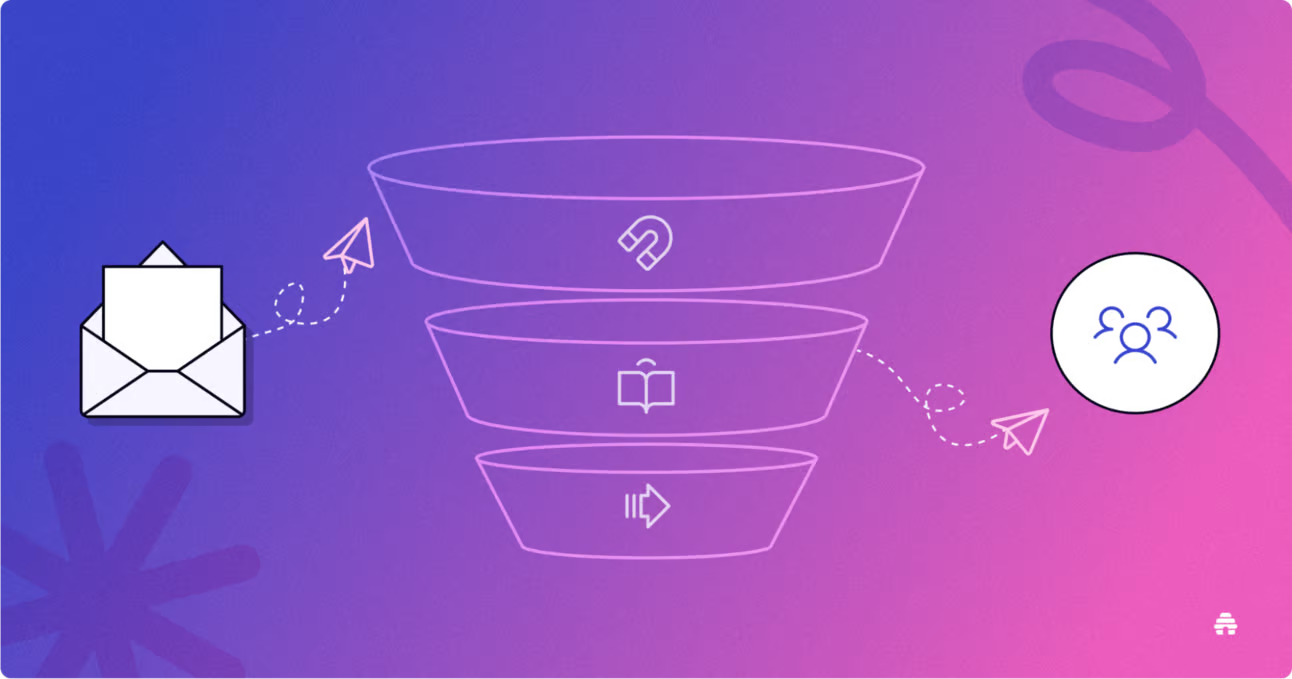
In today’s fast-paced marketing landscape, tracking the right funnel metrics is essential for making informed decisions and optimizing the customer journey. The sales and marketing funnel represents the path from initial brand interaction to conversion, and understanding its performance helps businesses improve engagement, conversion rates, and overall profitability. Here’s a deep dive into the key funnel metrics every marketer should monitor.
Why Funnel Metrics Matter
Funnel metrics provide critical insights into marketing effectiveness by:
- Identifying bottlenecks where potential customers drop off.
- Revealing high-converting stages and the factors driving success.
- Helping allocate resources effectively to maximize return on investment (ROI).
- Improving user experience by highlighting areas that need refinement.
By tracking and analyzing these metrics, marketers can continuously refine their strategies for better performance.
Top-of-Funnel Metrics: Capturing Attention
At the awareness stage, the goal is to attract potential customers. Key metrics include:
- Website Traffic – Track sources (organic, paid, social, referral) to see which channels drive the most visitors.
- Page Views & Session Duration – Measure engagement levels; higher numbers suggest compelling content.
- Unique Visitors – Understand how many new potential customers are discovering your brand.
These metrics help assess brand visibility and the effectiveness of your marketing outreach. Using OKR software, businesses can further align these top-of-funnel metrics with strategic objectives, ensuring that awareness efforts contribute directly to broader organizational goals.
Mid-Funnel Metrics: Building Interest and Consideration
As prospects move from awareness to interest and consideration, engagement metrics become crucial:
- Conversion Rates by Stage – Measure transitions from visitor to lead, lead to MQL (Marketing Qualified Lead), and MQL to SQL (Sales Qualified Lead).
- Lead Magnet Downloads – Track engagement with gated content like whitepapers, eBooks, or reports.
- Email Open & Click-Through Rates – Gauge how well your email marketing nurtures leads.
Optimizing these areas ensures prospects stay engaged and move closer to conversion.
Bottom-of-Funnel Metrics: Driving Purchase Decisions
When leads approach a purchase decision, it’s important to track:
- Sales Conversion Rate – The percentage of leads that turn into customers, reflecting sales efficiency.
- Lead-to-Customer Ratio – Compare the total number of leads generated to actual conversions over time.
- Cart Abandonment Rate (for e-commerce) – Identify friction points preventing final purchases.
These metrics highlight how well the sales process is performing and where improvements are needed.
Post-Purchase Metrics: Ensuring Retention & Loyalty
Customer acquisition is only part of the equation—retention and advocacy drive long-term growth. Key metrics include:
- Customer Lifetime Value (CLV) – Measures total revenue generated from a single customer over time.
- Repeat Purchase Rate – Indicates customer loyalty and satisfaction.
- Net Promoter Score (NPS) – Assesses how likely customers are to recommend your brand.
Satisfied customers lead to higher retention rates, referrals, and stronger brand advocacy.
Funnel Efficiency Metrics: Optimizing for Better Performance
Beyond stage-specific tracking, these efficiency metrics provide a holistic view of funnel performance:
- Cost Per Acquisition (CPA) – Calculates the total cost of acquiring a new customer.
- Funnel Leakage Points – Identifies where drop-offs occur, helping refine marketing efforts.
- Time to Conversion – Measures the length of the sales cycle, aiding in forecasting and resource planning.
Monitoring these metrics ensures the funnel remains cost-effective and efficient.
Turning Data into Action: Interpreting Funnel Metrics
Data alone isn’t enough—marketers must analyze and act on insights:
- Regular Performance Reviews – Track trends and sudden shifts in key metrics.
- A/B Testing – Experiment with landing pages, email campaigns, and messaging to optimize conversion rates.
- Customer Feedback – Incorporate direct customer insights to improve each stage of the funnel.
These steps help refine marketing efforts and ensure a data-driven approach to growth.
Leveraging Technology for Funnel Tracking
Modern marketing tools simplify tracking and analysis:
- CRM Systems – Capture lead interactions and personalize communication.
- Analytics Platforms – Google Analytics and similar tools track user behavior and conversion paths.
- Marketing Automation – Automate follow-ups, content delivery, and reporting for real-time insights.
Investing in the right technology ensures accurate tracking and better decision-making.
Continuous Optimization: Staying Ahead in Marketing
The marketing funnel isn’t static—it evolves with changing customer behavior and market trends. Businesses that consistently analyze funnel metrics and adapt their strategies stay competitive. By focusing on these essential metrics, marketers can drive higher conversions, improve customer experiences, and achieve sustainable growth.