

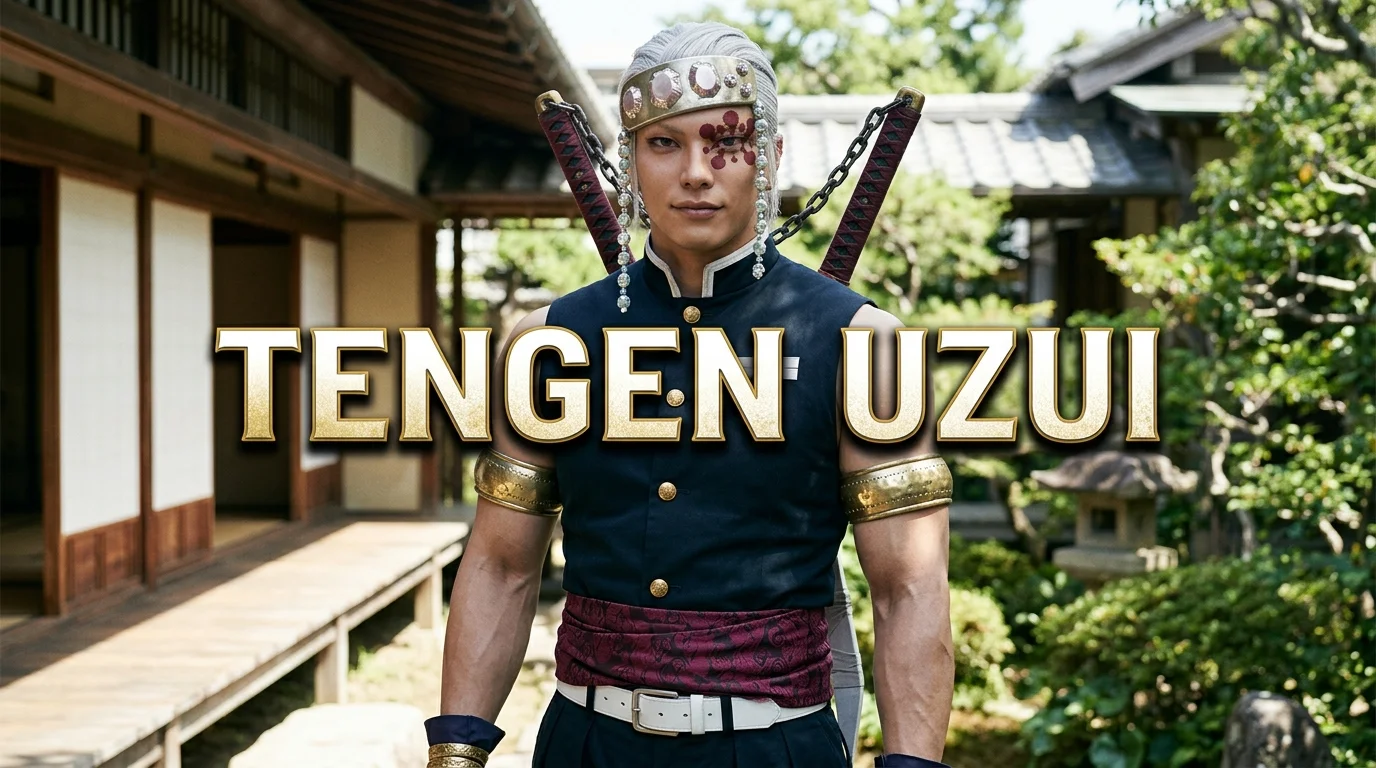
Tengen Uzui is the Sound Hashira from Demon Slayer: Kimetsu no Yaiba. A former shinobi, he’s known for his flamboyant personality and explosive fighting style. His defining story unfolds during the Entertainment District Arc alongside Tanjiro, Zenitsu, and Inosuke.
He stands apart from other Hashira because sound shapes both his combat style and tactical thinking. His background also gives him unusual weapons, stealth training, and strong survival skills. Beneath his theatrical behavior, he places human lives ahead of completing a mission.
| Quick fact | Detail |
|---|---|
| Series | Demon Slayer: Kimetsu no Yaiba |
| Role | Sound Hashira |
| Former profession | Shinobi |
| Age | 23 during the Entertainment District Arc |
| Birthday | October 31 |
| Height | 198 cm, about 6 feet 6 inches |
| Breathing Style | Sound Breathing |
| Wives | Hinatsuru, Makio, and Suma |
| Japanese voice actor | Katsuyuki Konishi |
| English voice actor | Ray Chase |
| Major opponent | Gyutaro, Upper Rank Six |
| Later status | Retired Hashira |
Direct answer: Tengen is a former shinobi who becomes the Sound Hashira of the Demon Slayer Corps. He fights with two chained Nichirin cleavers, Sound Breathing, explosives, and exceptional hearing. His most important battle comes against Gyutaro in the Entertainment District, where severe injuries eventually lead him to retire.
Who Is Tengen Uzui in Demon Slayer?
Tengen Uzui is one of the elite Hashira serving the Demon Slayer Corps. The official U.S. anime site identifies him as the Sound Hashira and a former shinobi. It also highlights his love of anything flashy.
He becomes central after the Mugen Train story and takes Tanjiro’s group on another dangerous mission. That assignment leads them into Yoshiwara’s Entertainment District. His three wives had already entered the area to investigate suspected demon activity.
The Entertainment District Arc reveals more than his fighting power. It exposes his history, values, marriage, leadership style, and fear of becoming like his family. Those elements make him more complicated than his loud introduction suggests.
Fans exploring more character and television coverage can browse Publishie’s Entertainment section. The site covers movies, public figures, television, and other pop-culture topics. That makes this character profile a natural addition to its entertainment library.
Tengen’s Age, Height, Birthday, and Appearance
He is 23 years old during the Entertainment District Arc. Character references list his birthday as October 31 and his height as 198 centimeters. That converts to roughly 6 feet 6 inches for U.S. readers.
His white hair, jeweled headband, arm bands, and facial markings make him instantly recognizable. The appearance intentionally matches his obsession with being flashy. His muscular build also reflects years of harsh shinobi and Demon Slayer training.
His appearance becomes simpler after his major battle. He no longer needs to present himself as an active Hashira. The physical changes also reflect the permanent cost of defeating an Upper Rank demon.
Why Was Tengen a Shinobi?
Uzui was raised within a shinobi family before joining the Demon Slayer Corps. His upbringing valued obedience, survival, and mission success under brutal conditions. He eventually rejected the values his father and surviving brother represented.
That past explains his speed, stealth, poison resistance, and unconventional combat methods. He approaches battles differently from swordsmen trained only through the Corps. Shinobi experience also helps him use explosives and gather intelligence efficiently.
His moral break from that upbringing matters more than the skills themselves. He refuses to treat allies as disposable tools for accomplishing assignments. Protecting people becomes more important than preserving old shinobi traditions.
What Is Sound Breathing?
Sound Breathing is the combat style associated with the Sound Hashira. Crunchyroll describes it as a personalized technique derived from Thunder Breathing. It combines his specialized weapons with explosive sound and fast attacks.
His weapons are two huge Nichirin cleavers connected by a chain. That design lets him swing, rotate, and reposition both blades during close combat. Explosives add another layer to attacks that already cover significant space.
The fighting style suits his background unusually well. His hearing helps him process the sounds created during combat. His weapons then turn that information into aggressive attacks and defensive reactions.
The Musical Score Technique
His Musical Score Technique is one of his most interesting abilities. He studies an enemy’s attacks until their movements can be understood like musical rhythm. That analysis helps him identify patterns, openings, and repeated behaviors.
The technique does not give him instant knowledge of every opponent. He needs time to observe enough movements and construct the pattern. That limitation keeps it tactical rather than an automatic win.
The method becomes especially important while fighting Gyutaro. Even while seriously injured, he can continue reading the Upper Rank demon’s attacks. The result creates one of the anime’s most memorable close-range battles.
How Powerful Is the Sound Hashira?
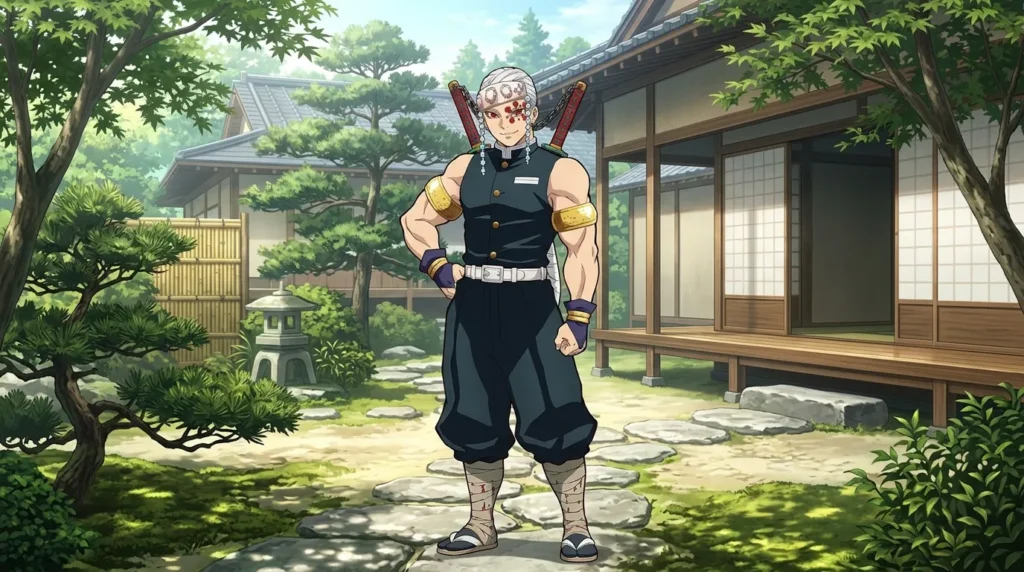
His strength comes from combining several specialized abilities rather than one overwhelming technique. He has powerful hearing, shinobi training, large weapons, explosives, speed, and strong battle awareness. Those tools make him exceptionally dangerous in chaotic environments.
Calling him the strongest Hashira would go beyond what the story establishes. Different Hashira excel in different areas, and later fighters gain additional advantages. His Entertainment District performance is more useful than unsupported rankings.
He keeps fighting Gyutaro while poison spreads through his body and after suffering severe physical damage. That performance demonstrates endurance and tactical discipline under extreme pressure. It also shows why evaluating him only through raw power misses much of his skill.
Readers who enjoy fictional battle analysis may also like Publishie’s Vermithor vs. Vhagar comparison. That article compares two fantasy characters through size, experience, and combat advantages. Similar criteria can help separate evidence from fandom assumptions.
Who Are Tengen’s Three Wives?
His three wives are Hinatsuru, Makio, and Suma. All three are trained kunoichi with skills in combat, reconnaissance, and espionage. An official Sega character page confirms they support their husband as a coordinated unit during missions.
Hinatsuru is usually portrayed as calm, strategic, and measured. Makio has a more forceful personality and reacts quickly under pressure. Suma is openly emotional but still participates in dangerous infiltration work.
Their role becomes essential during the Entertainment District mission. They enter different establishments while gathering information about suspected demons. The operation becomes dangerous after communication with them stops.
Why Does He Have Three Wives?
The series presents the marriages within his shinobi background rather than modern Japanese life. The arrangement is part of the fictional social environment surrounding his clan. The story spends more time showing the relationships than explaining the custom.
What matters most to his characterization is how he treats his wives. He repeatedly rejects the shinobi belief that completing a mission outweighs human survival. He places their lives above his own and responds urgently when they disappear.
That attitude sharply contrasts with his childhood. He came from a system that treated people as expendable resources. His adult family represents his deliberate rejection of that system.
The Entertainment District Battle Against Gyutaro
The mission eventually leads to Gyutaro and Daki, who share the Upper Rank Six position. Tanjiro and his allies must coordinate their attacks while civilians remain endangered nearby. Uzui takes the primary role against Gyutaro.
The fight pushes him beyond his usual limits. Gyutaro’s poison creates a constant threat while both fighters exchange rapid attacks. His Musical Score analysis becomes more useful as the battle continues.
Victory requires cooperation rather than a single fighter overpowering both demons. Tanjiro, Zenitsu, Inosuke, Nezuko, the wives, and the Sound Hashira each affect the outcome. The arc consequently emphasizes teamwork alongside individual strength.
Does Tengen Die in Demon Slayer?
No, he does not die during the Entertainment District Arc. He survives the fight against Upper Rank Six despite suffering catastrophic injuries. He permanently loses his left hand and left eye during the battle.
Survival does not mean he returns to his former position. The injuries make continuing normal Hashira duties impractical. He therefore retires from active frontline service after the mission.
His retirement also honors an earlier hope shared within his family. Hinatsuru had wanted them to leave dangerous shinobi-style lives behind after defeating an Upper Rank. Surviving the Entertainment District creates that opportunity.
What Happens to Tengen After Retirement?
Retirement does not remove him from the Demon Slayer Corps entirely. He later helps with Hashira Training by supervising physical conditioning. His demanding approach reflects both military discipline and concern for the trainees.
He remains willing to support the organization despite his injuries. That decision proves his retirement is practical, not cowardly. He has already sacrificed enough to understand where his limits now stand.
His later appearances also complete his character arc. He begins as a loud Hashira who seems obsessed with spectacle. He becomes easier to understand once his past, injuries, and priorities receive more attention.
For related interactive entertainment coverage, visit Publishie’s Gaming section. Demon Slayer also has an extensive video-game presence beyond the anime and manga. Character-focused coverage can naturally connect both categories.
Why the Character Remains Popular
His visual design makes him easy to recognize before viewers understand his personality. White hair, jeweled accessories, paired blades, and explosive attacks create a distinctive silhouette. His obsession with flashiness reinforces that visual identity.
The Entertainment District Arc then gives that appearance emotional context. His loud confidence exists beside guilt, loyalty, fear, and a rejection of his family’s cruelty. That contrast prevents him from remaining a purely comic character.
His combat scenes also remain a major part of his appeal. The anime’s Gyutaro confrontation continues receiving attention for its speed and animation. Later merchandising also keeps the character visible among U.S. and international fans.
Frequently Asked Questions
How old is Tengen Uzui?
He is 23 during the Entertainment District storyline. His birthday is October 31, according to character profile information. He is therefore an adult during his central anime arc.
What Breathing Style does he use?
He uses Sound Breathing, a style associated with his unusual weapons and explosive attacks. The technique is connected to Thunder Breathing. His exceptional hearing also supports his analysis of the Musical Score.
Who are his wives?
His wives are Hinatsuru, Makio, and Suma. All three have kunoichi training and participate in intelligence work. They assist directly during the Entertainment District mission.
Does the Sound Hashira die?
No, he survives his battle with Gyutaro. He suffers permanent injuries and retires from active Hashira duty afterward. He later returns in a supporting training role.
Is he still a Hashira after the Entertainment District Arc?
He retires from active Hashira service after losing his left hand and left eye. His connection to the Corps continues despite that retirement. He later helps train Demon Slayers preparing for future battles.
Final Takeaway
The Sound Hashira works because his spectacle never replaces his character development. His shinobi past explains both his unusual skills and his determination to protect people. His marriage, battle injuries, and retirement reinforce the values he chooses for himself.
His fight with Gyutaro remains the defining demonstration of those choices. He risks his life without treating allies as disposable tools. That difference separates the man he becomes from the shinobi system that raised him.
For U.S. readers discovering Demon Slayer, his story offers a strong introduction to the wider Hashira group. Start with the Entertainment District Arc to see his central conflict in context. Then explore the other Hashira to see how each approaches duty, sacrifice, and combat differently.
—–