

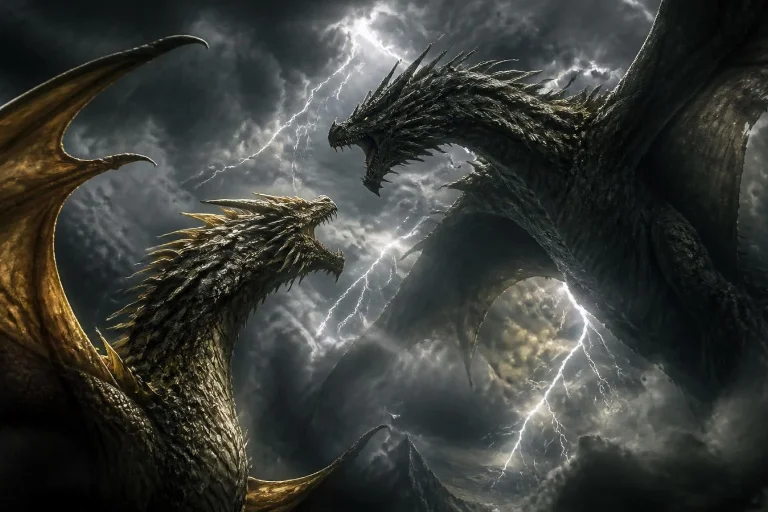
The Vermithor vs. Vhagar debate pits two enormous dragons against each other. Vhagar is larger, older, and far more experienced in battle. Vermithor is younger, still huge, and potentially less hindered by age.
So, which dragon has the advantage? Vhagar has the stronger case because of her size and combat history. Yet Vermithor has enough power to make a hypothetical fight far less predictable than their rankings suggest.
| Category | Vermithor | Vhagar |
| Nickname | The Bronze Fury | Often called the Queen of All Dragons |
| Sex | Male | Female |
| Size rank during the Dance | Second-largest living dragon | Largest living dragon |
| Approximate age during the Dance | Around 100 years | Around 180 years |
| Famous earlier rider | King Jaehaerys I | Queen Visenya Targaryen |
| Dance-era rider | Hugh Hammer | Aemond Targaryen |
| Major advantage | Youth and immense power | Size and battle experience |
| Main disadvantage | Less combat experience | Advanced age |
| Likely edge in a direct fight | Dangerous challenger | Stronger favorite |
Direct answer: Vhagar has the advantage over Vermithor because she is larger and has much greater combat experience. The Bronze Fury could still present a serious threat. His younger age could offer better mobility and endurance, making a direct battle dangerous for both dragons.
Vermithor vs. Vhagar: The Biggest Differences
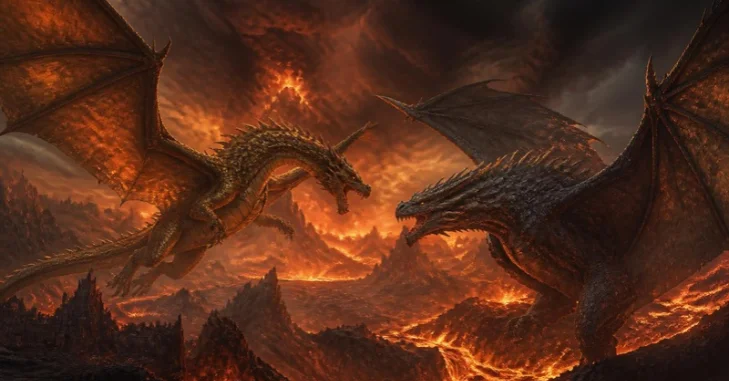
Vermithor vs. Vhagar is a comparison between two of the most imposing dragons alive during the Dance of the Dragons. Vhagar holds the top position, while the Bronze Fury ranks directly behind her. They represent two different combinations of size, age, and experience.
Their differences go beyond raw dimensions. One is an ancient survivor with generations of riders and warfare behind her. The other is a younger giant whose combination of size and age creates a different threat.
Which Dragon Is Bigger?
Vhagar is bigger. During the Dance, she is identified as the largest living dragon in Westeros. The Bronze Fury is generally identified as second-largest among the living Targaryen dragons.
That distinction matters because dragons continue growing as they age. Vhagar had lived for roughly 180 years by the civil war. Her rival was around a century old, giving the older dragon decades of additional growth.
Fans sometimes encounter precise measurements for both creatures online. Those figures should be treated cautiously because the source material provides no dependable official length or wingspan measurements. Their canonical ranking is much safer than assigning exact feet or meters.
How Much Bigger Is Vhagar?
There isn’t a reliable canonical percentage showing the difference between them. That makes claims that one is exactly 80 or 90 percent of the other’s size speculative. What the story establishes clearly is their ranking.
Vhagar was also approaching the legendary Balerion’s size by 129 AC. That places her scale in exceptional territory even among Targaryen dragons. Vermithor’s second-place ranking still makes him enormous compared with most dragons fighting in the civil war.
Which Dragon Is Older?
Vhagar wins the age comparison by a huge margin. She dates back to the period around Aegon’s Conquest and was ridden by Queen Visenya Targaryen. Several generations later, Aemond claims the ancient dragon.
The Bronze Fury is much younger, although calling him young would be misleading. He is around 100 years old during the Dance and previously carried King Jaehaerys I. That age still places him among Westeros’s great mature dragons.
Age creates an interesting trade-off here. More years gave Vhagar more time to grow and accumulate experience. Yet extreme age may also reduce the speed and responsiveness that a younger opponent could exploit.
Which Dragon Is Stronger?
Pure physical strength likely favors Vhagar because of her greater mass. Her enormous jaws, body, and wings make close-range contact dangerous. A smaller opponent can’t afford many mistakes against that weight.
Yet strength isn’t determined by body size alone. The Bronze Fury remains one of the largest dragons in existence and carries tremendous destructive power. The television series also emphasizes his exceptional size and ferocity.
This makes the matchup more competitive than a simple first-versus-second size ranking suggests. Vhagar probably has greater raw force. Her opponent may compensate through youth and potentially better movement.
Which Dragon Is Faster?
No canonical source gives dependable top-speed figures for either dragon. Any claim that assigns miles-per-hour speeds should therefore be treated as fan estimation. Their ages and physical characteristics offer a more defensible basis for comparison.
Vhagar’s massive size gives her tremendous aerial presence, but she is an extremely old dragon. The younger Bronze Fury could plausibly maneuver more efficiently. That is an inference from their ages rather than a confirmed statistic.
Speed would matter greatly during an aerial encounter. A more mobile dragon could avoid direct collisions and attack from better angles. Size becomes much more valuable once Vhagar closes the distance.
Vhagar Has the Clear Battle-Experience Advantage
This category creates one of the largest gaps between the two. Vhagar’s history stretches back to Aegon’s Conquest. She served Queen Visenya and later carried several other riders before Aemond.
Her opponent’s earlier career was considerably quieter. King Jaehaerys ruled through a largely peaceful period, limiting the dragon’s opportunities for warfare. One notable exception came during the Fourth Dornish War.
Combat experience matters because dragon battles aren’t simple strength contests. Positioning, reactions, and coordination with a rider can determine whether an attack succeeds. Vhagar enters any hypothetical matchup with far more experience in violent conflict.
Vermithor’s Biggest Advantages
The Bronze Fury’s first advantage is obvious: he is enormous. Being smaller than the largest living dragon doesn’t make him small. His second-place ranking puts him above almost every alternative opponent available during the Dance.
His age may also work in his favor. Roughly a century old, he has had plenty of time to grow without reaching Vhagar’s extreme age. That balance could give him a useful combination of mass, endurance, and mobility.
His reputation for ferocity matters too. House of the Dragon specifically emphasizes how dangerous he is during the search for new riders. Readers interested in gaming alongside fantasy entertainment can also explore Publishie’s PC gaming controller guide for another entertainment-focused read.
Vermithor’s Pros
- Second-largest living dragon during the Dance.
- Decades younger than his main rival.
- Immense physical strength.
- Potential mobility advantage.
- Exceptionally fierce temperament.
- Powerful enough to threaten almost any dragon.
Vermithor’s Cons
- Smaller than Vhagar
- Much less battle experience
- Less proven in dragon-on-dragon combat
- Success depends heavily on his rider
- Can’t rely on raw mass against the larger dragon
Vhagar’s Biggest Advantages
Vhagar’s greatest weapon is her scale. She is the largest living dragon during this period and had grown close to Balerion’s legendary proportions. Few opponents could safely absorb a direct bite, collision, or close-range attack from her.
Experience strengthens that physical advantage. She survived across several generations of Targaryen history and participated in warfare long before the Dance. Aemond therefore rides an animal with an unusually deep combat history.
Her age is also her main weakness. A creature of such immense size may lack the responsiveness of a younger rival. Readers who enjoy comparing performance gear can also read Publishie’s Turtle Beach Elite Pro 2 SuperAmp review.
Vhagar’s Pros
- Largest living dragon of the period.
- Greater raw size and mass.
- Extensive battle history.
- Enormous jaws and physical power.
- Proven ability against other dragons.
- Highly intimidating battlefield presence.
Vhagar’s Cons
- Around 180 years old during the Dance.
- Likely less agile than younger dragons.
- Huge body can make maneuvering harder.
- A smaller, quicker attacker may find openings.
- Her rider must still manage an ancient, powerful animal.
Could Vermithor Kill Vhagar?
Yes, killing Vhagar is plausible within the fictional rules of the story. Being the largest dragon doesn’t make her invulnerable. House of the Dragon repeatedly shows that dragon combat can become chaotic and lethal.
But plausible doesn’t mean probable. Vhagar’s combination of size, experience, and destructive strength gives her major advantages. Her opponent would need to exploit mobility while avoiding a prolonged close-range struggle.
A successful attack could still leave the victor badly wounded. Two creatures of this scale could inflict catastrophic damage within seconds. That makes any supposed easy victory hard to defend.
Who Would Win: Vermithor or Vhagar?
Vhagar has the stronger advantages in a hypothetical one-on-one battle. Her greater size and extraordinary combat experience provide two major edges. She has also demonstrated her effectiveness against other dragons.
The Bronze Fury still has a credible path to victory. Youth could help him move faster, stay active longer, and attack from angles the older dragon struggles to cover. His size means he also has enough force to make successful attacks count.
The rider could change everything. A skilled rider who understands positioning might compensate for a dragon’s physical disadvantage. Poor decisions could waste even the largest dragon’s natural strengths.
There is another important limitation. The source story doesn’t provide a canonical head-to-head battle between these two. Claims about a definitive winner are therefore analysis rather than established lore.
Why This Matchup Is Closer Than Size Alone Suggests
Imagine the battle as a trade between mass and movement. Vhagar wants to force close contact, where her weight and jaws become decisive. Her challenger benefits from maintaining space and attacking selectively.
That creates a matchup where the environment matters. Open skies could provide room for a younger dragon to maneuver. A confined battlefield might favor the larger creature because escaping her reach becomes harder.
The first successful attack could determine the entire fight. Dragons don’t have health bars or predictable damage thresholds. One well-placed bite can matter more than several minutes of aerial maneuvering.
Key Takeaways
- Vhagar is canonically larger.
- The Bronze Fury ranks second among living dragons during the Dance.
- Vhagar is roughly 80 years older.
- Vhagar has substantially more battle experience.
- The younger dragon may have a mobility advantage, though no official speeds exist.
- Exact online measurements for either creature aren’t canonical.
- Vhagar has the clearer advantages in a hypothetical fight.
- No canonical one-on-one battle establishes a definitive result.
Frequently Asked Questions
Who is bigger in Vermithor vs Vhagar?
Vhagar is bigger and ranks as the largest living dragon during the Dance. Her bronze rival ranks second among the living dragons. The books don’t provide dependable official measurements showing their exact size difference.
That distinction explains why exact online size charts often disagree. Canon establishes the order more clearly than the measurements. Using the ranking avoids presenting fan estimates as confirmed facts.
Is Vermithor stronger than Vhagar?
There is no canonical strength score that answers this directly. Vhagar’s greater size suggests more raw physical power, while her rival combines huge size with younger age. The outcome would depend on far more than strength alone.
Experience also favors the older dragon. She participated in warfare across a much longer history. Her challenger remains dangerous enough that a fight couldn’t safely be treated as automatic.
Is Vermithor faster than Vhagar?
The books and television series don’t provide official speed figures. His younger age makes a mobility advantage plausible, but that remains an inference. Fans shouldn’t treat precise speed claims as canon.
Vhagar’s enormous size could work against her during rapid maneuvers. It also gives her tremendous reach once she closes the gap. Those competing traits make speed only one part of the matchup.
Did Vermithor ever fight Vhagar?
No canonical battle pits the two directly against each other. Their separate histories allow fans to compare their abilities, but they don’t provide an official winner. That leaves the matchup open to reasoned interpretation.
The distinction matters for any matchup analysis. Statements about who wins are hypothetical conclusions based on size, age, and combat history. They aren’t events confirmed by Fire & Blood.
Who rode these dragons?
Vhagar’s famous riders include Queen Visenya, Prince Baelon, Laena Velaryon, and Aemond Targaryen. That long rider history reflects her exceptional lifespan. She lived through dramatically different periods of Targaryen rule.
King Jaehaerys I was the Bronze Fury’s famous original rider. Hugh Hammer later claims him during the Dance. Readers interested in more personality-focused content can browse Publishie’s profile of Jack Black’s wife after finishing this comparison.