


Cathy Volsan became known nationally through her connections to several major figures in Detroit history. She was the niece of longtime Detroit Mayor Coleman A. Young and later married Johnny Curry. Her name also appeared in reporting about Richard “White Boy Rick” Wershe Jr. and federal investigations during the late 1980s and early 1990s.
Her story returned to public attention after her death in Detroit in March 2026. She was 64, according to a report published the following day. That update added a final chapter to a life repeatedly connected with Detroit politics, crime reporting, and law-enforcement investigations.
Direct answer: Volsan-Curry was the daughter of Juanita Clark and Willie Volsan, and the niece of Detroit Mayor Coleman Young. She married Johnny Curry and later became associated with Richard Wershe Jr. Her name appeared in several federal investigations, although charges against her in a 1991 sting were later dropped. She died in March 2026 at age 64.
| Key fact | Details |
|---|---|
| Known for | Connection to Detroit political and crime history |
| Family connection | Niece of former Detroit Mayor Coleman A. Young |
| Parents | Juanita Clark and Willie Volsan |
| Former husband | Johnny Curry |
| Other widely reported connection | Richard “White Boy Rick” Wershe Jr. |
| Children | One grown son was reported in 2026 |
| Death | March 18, 2026 |
| Age at death | 64 |
| Place of death | Sinai-Grace Hospital in Detroit |
| Reported health issue | Kidney disease, according to a family friend |
Who Was Cathy Volsan?
She was born into a family closely connected with Detroit’s political establishment. Her mother, Juanita Clark, was Coleman Young’s sister, making the former mayor her maternal uncle. Her father, Willie Volsan, later became involved in a federal investigation that brought additional attention to the family.
Young served as Detroit’s mayor for two decades and remained one of the city’s defining political figures. That relationship meant his niece attracted attention beyond what her personal life might otherwise have received. Historical reporting frequently identified her through this family connection when discussing later investigations.
Her story now sits within a broader group of biographies connecting private lives with larger public events. Publishie readers interested in those profiles can also read about Kevin Von Erich’s family history and later life. That profile similarly separates documented events from dramatized popular culture.
Marriage to Johnny Curry
Volsan-Curry married Johnny Curry during the 1980s. Curry became the focus of a major federal drug investigation in Detroit and later received a lengthy prison sentence. Contemporary reporting described his organization as a significant cocaine operation on the city’s east side.
Their marriage also intensified federal interest in possible connections between criminal activity and people around city government. Historical records examined whether members of Detroit law enforcement had provided improper assistance or information. Those questions became part of broader investigations rather than proof that every person discussed committed a crime.
A 2026 obituary reported that the couple had a son who was an adult by that year. Public reporting provides comparatively little reliable information about him. That limited record makes speculation about his identity, career, or private life inappropriate.
Her Connection to Richard “White Boy Rick” Wershe Jr.
After Curry went to prison, Volsan-Curry became romantically involved with Richard Wershe Jr. Wershe had worked as a teenage informant before later becoming a convicted drug dealer himself. Their relationship has since appeared in journalism, books, documentaries, and material connected with the film White Boy Rick.
Sony Pictures production notes for the film identify Curry as her husband and describe Wershe’s infiltration of Curry’s organization. Those materials help explain why her name appears so often in accounts of Wershe’s life. They should still be understood as film production material rather than a complete historical record.
Long-form reporting has provided additional details about their relationship, although some descriptions rely on Wershe’s own recollections. Those claims should be attributed rather than treated as independently established facts. Readers should distinguish documented court history from memories reported many years later.
Publishie also covers people whose private relationships became part of their public stories. Its profile of Tanya Haden and her marriage to Jack Black offers another biography-focused example. The circumstances differ sharply, but both topics show why relationship searches often lead readers toward broader life histories.
The 1991 Federal Sting and What Happened
Her name became especially prominent during a federal sting disclosed in 1991. Federal authorities alleged that corrupt police officers had agreed to protect supposed drug shipments and other illegal activity. The supposed traffickers were undercover agents, making the operation a controlled law-enforcement investigation.
She and her father were among those charged during the investigation. Historical reporting says she helped connect undercover contacts with her father after an initial effort to find police assistance. Defense lawyers later argued that pressure and her personal circumstances affected how she became involved.
The outcome matters because later summaries sometimes blur accusations and convictions. Prosecutors ultimately dropped charges against Volsan-Curry, while they convicted and sentenced Willie Volsan to prison. That distinction is essential when describing her legal history accurately.
Why Her Story Became Part of Detroit History
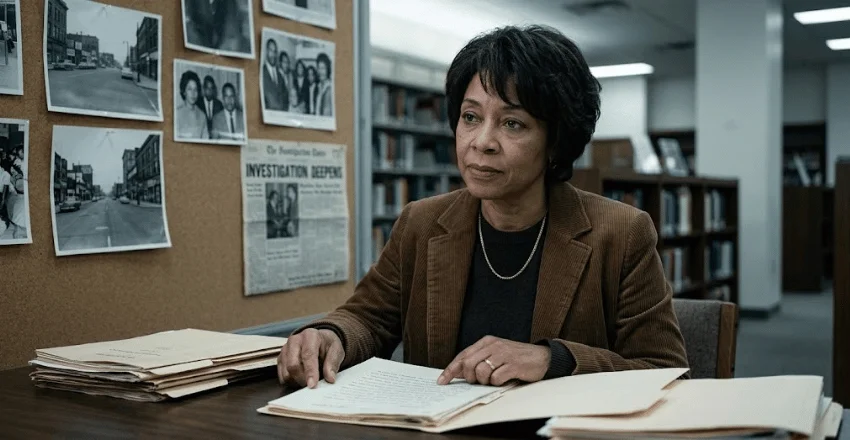
Her public significance largely came from the unusual overlap in her life. She was related to the mayor, married to a major drug defendant, and linked romantically with a controversial FBI informant. Federal investigations then placed members of her family and Detroit police officers under national scrutiny.
The University of Michigan’s Policing and Social Justice HistoryLab preserves material about these relationships and investigations. Its project places the events within Detroit’s broader war-on-drugs era and debates about police conduct. That academic framing offers useful context beyond individual crime stories.
Popular culture later renewed interest through documentaries and the 2018 film White Boy Rick. Those portrayals focus mainly on Wershe, yet his association with the Curry organization brings Volsan-Curry into the narrative. Her life therefore became intertwined with how later generations encountered 1980s Detroit.
Readers exploring more American entertainment biographies can also visit Publishie’s overview of Will Smith’s film career and personal background. That page offers a different kind of public-life profile focused on entertainment rather than crime history.
Her Later Years and Death in 2026
Public information about her later decades is much thinner than reporting from the 1980s and 1990s. A March 2026 report said she had been living in her mother’s home in northwest Detroit. It also described her as having faced addiction during earlier periods of her life.
She died on March 18, 2026, at Sinai-Grace Hospital in Detroit. Deadline Detroit reported her age as 64 and cited a family friend regarding her death. The same source said she had been dealing with kidney disease.
That report also included a family friend’s remembrance of her as friendly and personally warm. Such comments offer a perspective different from decades of crime-focused coverage. They also show why a biography should separate a person’s character from the investigations surrounding them.
What the Public Record Does Not Clearly Establish
Several biographical details remain poorly documented in reliable public sources. Widely available records do not clearly establish her exact birth date, education, profession, or personal finances. Claims about those subjects should not be presented as established facts without stronger documentation.
The same caution applies to online net-worth estimates or highly specific personal details. No trustworthy source reviewed for this article supports a credible dollar figure for her wealth. Adding such numbers would create certainty that the available evidence does not justify.
This distinction matters because biographies can easily repeat unsupported details across multiple websites. Repetition does not turn an unsourced claim into a verified fact. The strongest account stays close to contemporary reporting, historical archives, and clearly attributed later updates.
Frequently Asked Questions
Who was Cathy Volsan?
She was the niece of former Detroit Mayor Coleman A. Young and the daughter of Juanita Clark and Willie Volsan. She became publicly known through her marriage to Johnny Curry, and later relationship with Richard Wershe Jr. Her name also appeared in federal investigations involving Detroit police and alleged drug protection.
Was she married to Johnny Curry?
Yes, she married Johnny Curry during the 1980s. Curry later received a federal prison sentence connected with his Detroit drug operation. Contemporary and later sources consistently identify them as husband and wife during that period.
Did she date White Boy Rick?
Yes, multiple sources report a relationship with Richard Wershe Jr. after Curry went to prison. Wershe became known nationally as “White Boy Rick” because of his unusual history as a teenage informant and later drug defendant.
Was she convicted in the federal police-corruption investigation?
No. She was charged during the 1991 investigation, but later reports say the charges against her were dropped. Her father, Willie Volsan, was convicted and served prison time.
How old was she when she died?
She was 64 when she died in March 2026. The report announcing her death did not provide an exact date of birth. That means you should not infer an exact birthday solely from her reported age.
What caused her death?
A family friend told Deadline Detroit that she had been battling kidney disease. The report does not provide a formal medical cause-of-death statement. The careful description is therefore that kidney disease was reported as a health issue before her death.
The Lasting Record
Volsan-Curry’s public record reflects several overlapping parts of Detroit history. Family politics, organized drug investigations, police corruption inquiries, and the White Boy Rick story all intersect around her biography. Treating those events carefully requires separating proven outcomes from allegations and recollections.
Her death in 2026 renewed attention to a name that appeared in Detroit reporting for decades. The surviving records show a complicated life that cannot be reduced to one relationship or investigation. For readers, the most reliable approach is to follow documented events and set aside unsupported internet claims.
For more profiles of public figures and their family histories, Publishie readers can also explore Gracie Abrams’ age, career, and family background. That keeps related biography content connected without forcing unrelated facts into this story.


