


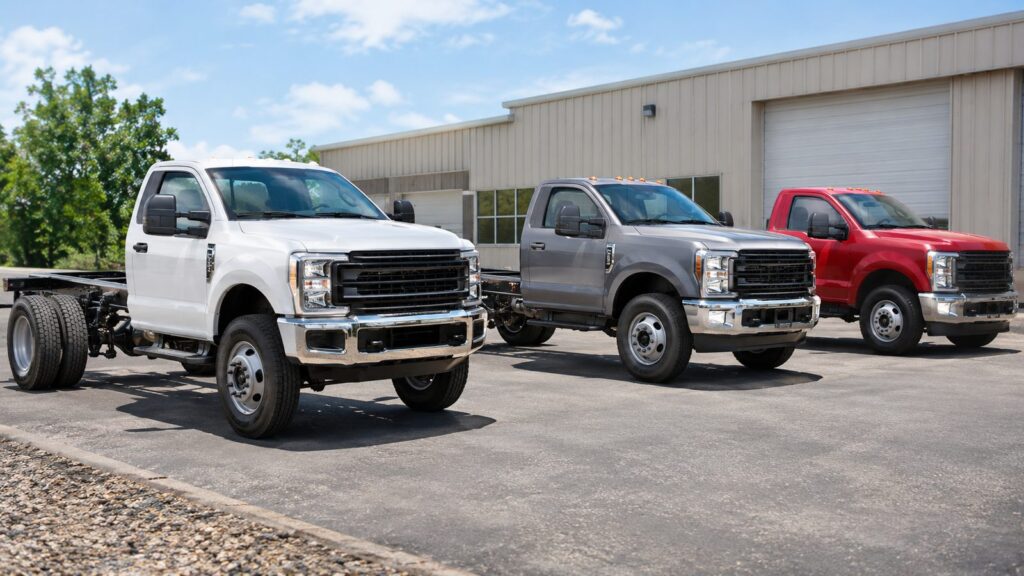
A chassis cab truck is a commercial vehicle sold with a cab, engine, drivetrain, and exposed rear frame. It does not include a factory pickup bed. Businesses add specialized bodies that match specific jobs, loads, and operating conditions. This design makes the vehicle useful for construction, towing, landscaping, utilities, delivery, maintenance, and municipal work. Buyers can choose a body after selecting the correct truck configuration. That flexibility separates these commercial platforms from conventional pickups.
| Key point | What it means |
|---|---|
| Basic design | Cab and exposed rear frame without a standard pickup bed |
| Main purpose | Provides a platform for specialized commercial bodies |
| Common upfits | Service body, dump body, flatbed, box, utility body, tow equipment |
| Important specifications | GVWR, payload, GCWR, wheelbase, cab-to-axle distance |
| Common U.S. brands | Ford, Chevrolet, GMC, Ram, and other commercial manufacturers |
| Best for | Businesses needing a purpose-built work vehicle |
Direct answer: A chassis cab is a truck designed around the body and equipment your business needs. Instead of receiving a finished pickup bed, you choose an appropriate commercial body. The right configuration depends on payload, towing demands, axle ratings, wheelbase, body size, and operating conditions.
What Is a Chassis Cab Truck?
A chassis cab starts with the working parts of a truck but leaves the rear frame open. An upfitter can mount equipment directly to that frame. Chevrolet describes the format as a bare-frame commercial truck designed for custom bodies. Common configurations include regular cabs and crew cabs. Buyers may also choose different wheelbases, axle ratings, drivetrains, and engine options. Those choices affect what equipment the completed vehicle can safely carry. The exposed frame is intentional rather than unfinished. It gives body builders a predictable platform for mounting equipment. This makes the truck suitable for jobs that a normal pickup bed cannot handle efficiently.
Common Chassis Cab Uses
Businesses choose these vehicles because one basic platform can support many different jobs. The finished body determines how the truck functions every day. That means two vehicles with similar factory specifications can perform completely different roles. Common upfits include the following.
- Service and utility bodies for electricians, plumbers, and maintenance crews
- Dump bodies for landscaping, construction, and municipal operations
- Flatbeds for equipment, building materials, and agricultural loads
- Box bodies for delivery and mobile storage
- Tow and recovery equipment
- Crane bodies for field service and heavy equipment work
- Stake bodies for landscaping and material transport
The best body depends on the work rather than appearance. A contractor carrying tools has different requirements from a towing company. Choosing the intended body first can prevent expensive specification mistakes. Readers comparing commercial vehicles can also browse Publishie’s Automobile coverage. That section covers vehicle specifications, technology, and ownership topics. It can help when comparing a work vehicle with other automotive options.
Chassis Cab vs. Pickup Truck
A standard pickup arrives with a completed bed that works for general cargo. A commercial cab-and-frame vehicle is intended for later body installation. This difference affects frame design, dimensions, suspension choices, and available configurations.
| Feature | Chassis cab | Pickup truck |
|---|---|---|
| Rear body | Added after production | Factory-installed pickup bed |
| Primary role | Commercial and vocational work | General personal and work use |
| Customization | High | Moderate |
| Body options | Service, dump, flatbed, box, crane, tow | Mainly pickup-bed accessories |
| Buying process | Truck and upfit planned together | Usually bought as a complete vehicle |
| Best choice | Specialized business application | General transportation and lighter work |
A pickup may remain the better choice when tools and cargo fit inside a normal bed. It is also simpler when no specialty body is required. A commercial platform becomes more useful when the body itself performs part of the job. Converting a pickup by removing its original bed is not always equivalent. Purpose-built commercial frames may have specifications chosen for body installation. Always confirm compatibility with the truck maker and upfitter before ordering equipment.
Key Specifications to Check Before Buying
The right truck starts with the finished vehicle, not the badge on the grille. Buyers should estimate body weight, equipment weight, passengers, cargo, and trailer requirements. Those figures help determine the ratings the completed vehicle needs.
GVWR and Payload
GVWR means Gross Vehicle Weight Rating. It represents the maximum rated weight of the vehicle and everything carried on it. The completed body, tools, fuel, passengers, and cargo all consume available capacity. A heavy service body can use a large part of the available payload before work equipment is loaded. That is why brochure payload numbers should not be treated as finished-truck capacity. Ask for calculations based on the exact configuration and planned body.
GCWR and Towing
GCWR means Gross Combined Weight Rating. It addresses the combined weight of the truck, load, and trailer within the manufacturer’s limits. Towing capacity can change substantially with engine, axle ratio, cab, wheelbase, and other equipment. For example, Ford publishes different tow ratings across individual Super Duty Chassis Cab configurations. The numbers vary by drivetrain and wheelbase. Buyers should use the rating for their exact vehicle rather than a headline maximum.
Cab-to-Axle Distance
Cab-to-axle distance measures from the back of the cab to the rear axle centerline. Upfitters often call this measurement CA. It plays a major part in determining which body lengths fit correctly. A mismatched body can affect weight distribution and vehicle handling. It may also create mounting or clearance problems. Discuss the planned body with the upfitter before finalizing the truck order.
Wheelbase and Cab Style
Longer wheelbases can support larger bodies but increase overall vehicle length. Shorter configurations may work better in congested areas. Crew cabs provide more passenger room but also consume space and add weight. Regular cabs are often practical for operators who need maximum body space. Crew cabs make more sense when several workers travel together. The duty cycle should guide the choice.
Gas or Diesel: Which Makes More Sense?
Gasoline engines can cost less to purchase and may suit moderate workloads. Maintenance can also be simpler for businesses that already operate gasoline vehicles. They can be practical where annual mileage and towing demands remain limited. Diesel engines are commonly chosen for demanding towing and high-load commercial use. Their torque characteristics often suit heavy work. Purchase price, maintenance costs, fuel availability, and operating hours still need consideration. Do not choose an engine from maximum ratings alone. Calculate how the truck will work during an average week. The cheaper option over several years may differ from the cheaper option on purchase day.
Current U.S. Price Examples
New commercial chassis prices vary by model, equipment, destination charges, and dealer conditions. Upfit costs are separate and can change the finished investment substantially. Buyers should therefore budget for both the vehicle and its final body. Manufacturers such as Ford, Ram, and Chevrolet publish starting MSRPs for their Super Duty, 3500, and Silverado HD chassis cab models on their official sites. Higher-capacity models, such as Ram 4500 and 5500 versions, start at higher prices. Check each maker’s current configurator for exact figures. These figures are manufacturer starting prices, not quotes for completed work vehicles. A service body, dump system, crane, liftgate, storage equipment, lighting, or towing equipment adds cost. Always request a complete truck-and-upfit estimate before comparing offers.
Do You Need a CDL to Drive One?
Buying a commercial-style truck does not automatically mean every driver needs a CDL. Federal CDL classifications depend on vehicle or combination ratings, passenger use, and hazardous materials. State requirements can also apply. Under FMCSA rules, a Class B CDL generally applies to a single vehicle rated at 26,001 pounds or more. Class A rules apply to qualifying combinations at 26,001 pounds or more with heavier trailers. Hazardous-material and passenger situations can create separate requirements. Compliance rules can become complicated for business vehicles. A truck may fall under commercial safety rules before reaching CDL weight thresholds. Check federal requirements and your state’s rules for the exact operation.
How to Choose the Right Chassis Cab Truck
Buying the correct platform requires planning the finished vehicle before ordering the base truck. Start with the job, body, and expected load. Then match the manufacturer’s specifications to those requirements. Use this buying sequence:
- Define the job. List the truck’s daily tasks and operating conditions.
- Choose the body. Decide whether you need a flatbed, dump, service, box, or other upfit.
- Estimate finished weight. Include body, equipment, passengers, tools, and cargo.
- Calculate towing needs. Include the loaded trailer, not only its empty weight.
- Select the proper GVWR. Leave appropriate capacity for real working loads.
- Confirm CA and wheelbase. Match both measurements to the planned body.
- Choose gas or diesel. Compare workload, mileage, maintenance, and purchase cost.
- Check licensing requirements. Review CDL and commercial-operation rules before assigning drivers.
- Get an upfitter review. Confirm mounting, electrical, clearance, and weight requirements.
- Compare finished prices. Evaluate the complete vehicle rather than the bare chassis alone.
Technology also matters for trucks driven throughout the workday. Drivers may depend on navigation, calls, dispatch systems, and hands-free communication. Publishie’s guide to pairing a phone with a vehicle covers common Bluetooth and smartphone connection methods.
Mistakes to Avoid When Ordering a Work Truck
One common mistake is choosing the chassis before deciding on the body. That can create weight, mounting, or dimensional conflicts later. Planning the upfit first reduces the chance of an expensive correction. Another mistake is comparing only horsepower or advertised towing maximums. Real ratings depend on the selected configuration. Buyers should verify the exact VIN-level or configuration-specific ratings whenever possible. Do not ignore resale considerations either. Specialized equipment can influence the type of buyer interested later. Publishie also explains why accurate vehicle presentation matters when selling a vehicle online.
Who Should Buy One?
A commercial cab-and-frame platform makes sense when your business needs equipment that cannot fit a normal pickup. It is especially useful when the rear body must store tools or perform work. Examples include field repair, towing, dumping, delivery, and utility operations. It may be unnecessary for an owner who mainly needs passenger space and occasional cargo capacity. A conventional pickup can be easier to buy, insure, park, and resell. The deciding factor should be the job the completed vehicle must perform. Think of the truck and body as one system. The base vehicle provides power, structure, braking, and rated capacity. The upfit turns those capabilities into a working business asset.
Frequently Asked Questions
What is a chassis cab truck used for?
A chassis cab truck provides a base for specialized commercial equipment and bodies. Businesses commonly add service bodies, dump beds, flatbeds, box bodies, towing equipment, or cranes. The finished configuration depends on the work being performed.
Is a chassis cab the same as a cab and chassis?
Yes, the terms generally describe the same type of commercial vehicle. Manufacturers and dealers may use slightly different wording. Both usually refer to a cab with an exposed rear frame intended for an upfit.
Can you put a regular pickup bed on a chassis cab?
A compatible body may sometimes be installed, but fitment should never be assumed. Frame dimensions, mounting points, axle location, and other specifications can differ. Confirm compatibility with the manufacturer and a qualified body installer.
Can you drive a chassis cab without a body?
The bare vehicle may be movable, but road use depends on proper equipment and applicable laws. Chevrolet notes that these trucks can be road-driven when correctly equipped and registered. Buyers should confirm lighting, mud flaps, registration, and state requirements before regular operation.
What should you check before ordering?
Start with body type, finished weight, payload needs, towing requirements, and cab-to-axle dimensions. Then compare GVWR, GCWR, wheelbase, drivetrain, engine, and electrical requirements. A body upfitter should review the planned configuration before purchase.
Final Buying Takeaway
The right work truck should be selected around the job it will perform every day. Start with the body and expected load, then choose a chassis with suitable ratings and dimensions. This approach reduces costly mismatches and gives the finished vehicle a clearer purpose. Before placing an order, get specifications from both the truck manufacturer and the body builder. Confirm weight distribution, capacity, mounting requirements, and applicable licensing rules. A well-planned configuration can serve a business more effectively than simply choosing the largest available truck. —