
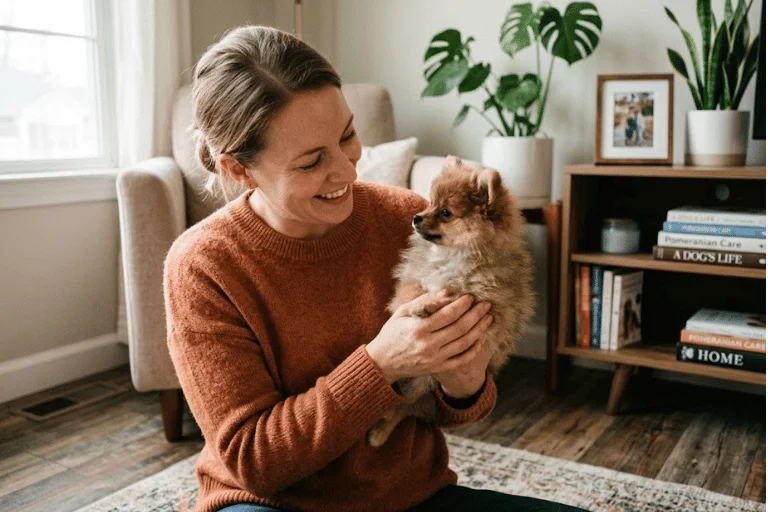
A teacup Pomeranian is not a separate breed or an American Kennel Club size class. The label usually describes an unusually small Pom or markets a standard-sized dog as rarer. U.S. buyers should prioritize health testing, stable structure, and temperament over promises of extreme size.
The AKC standard lists adult weight at 3 to 7 pounds, with 4 to 6 pounds ideal for show dogs. Smaller puppies may be fragile, and you can’t guarantee adult size from a young puppy. A responsible breeder should discuss health, parents, and realistic growth instead of promising a micro adult.
| Key fact | What U.S. owners should know |
|---|---|
| Official status | No separate teacup breed or AKC size class. |
| AKC adult weight | 3 to 7 pounds. |
| Ideal show weight | 4 to 6 pounds. |
| Typical lifespan | About 12 to 16 years. |
| Common health concerns | Patellar luxation, tracheal collapse, cardiac disease, eye disease, and hypoglycemia in small puppies. |
| U.S. breeder price | Often starts around $1,500 and can reach several thousand dollars. |
| Grooming | Regular brushing with frequent coat care. |
| Best buying priority | Health testing, sound structure, temperament, and realistic growth expectations. |
Key Takeaways
- Teacup is a marketing label, not an official breed size.
- The AKC standard already describes a toy dog weighing 3 to 7 pounds.
- Health screening matters more than promises of an unusually low adult weight.
- Young tiny puppies need careful feeding, handling, and veterinary oversight.
- U.S. buyers should verify parent health testing before paying a deposit.
What Is a Teacup Pomeranian?
The phrase teacup Pomeranian is a marketing description, not a separate AKC-recognized variety. The official standard defines one toy breed weighing 3 to 7 pounds. Dogs below that range do not become a new breed because of their size.
Online sellers may use terms such as micro, mini, pocket, or teddy bear to imply rarity. Those labels do not replace veterinary records, parent health screenings, or careful puppy evaluation. Buyers should treat exact adult-weight guarantees as sales claims, not reliable predictions.
How Small Do These Dogs Get?
The breed’s accepted adult weight range is already tiny, so small differences matter more than they might seem. Coat volume can also make two similarly weighted dogs look quite different. Ask about both parents’ mature weights and body condition rather than relying on puppy photos.
Extremely small dogs need careful handling around stairs, furniture, children, and much larger pets. PetMD notes that this breed’s small frame can make rough play and falls more dangerous. A sturdier dog within the accepted range may suit busy households better.
Temperament and Everyday Life

The AKC describes Poms as alert, intelligent, affectionate, and lively companion dogs. Their confidence can feel much larger than their body size. Consistent training helps manage barking, impulse control, and attention-seeking behaviors.
Apartment living can work well when you keep exercise, enrichment, and toilet routines consistent. Short walks and indoor games can meet much of their activity needs. Gentle socialization also helps a small dog cope with visitors, handling, noises, and other animals.
Health Risks and Why Tiny Size Needs Caution
Responsible breeding matters because the breed has several health problems. The AKC recommends patella, cardiac, and ophthalmologist evaluations for breeding dogs. The American Pomeranian Club also supports CHIC health screening through OFA.
Low blood sugar deserves special attention in young, small puppies. PetMD says hypoglycemia can affect small breeds and puppies under three months when they do not eat frequently enough. Weakness, shaking, stumbling, or seizures require prompt veterinary attention.
Tracheal collapse is another concern in small dogs, including this breed. Cornell describes it as a progressive airway disorder that can cause chronic coughing. Repeated coughing, breathing distress, or exercise intolerance deserves veterinary assessment.
How Long Do They Live?
Published lifespan ranges differ slightly, but they place the breed in the low-to-mid teens. PetMD lists 12 to 16 years, while AKC’s lifespan overview lists 14 to 16 years. Individual longevity depends on genetics, preventive care, weight, dental health, and disease management.
A smaller advertised size does not create a separate lifespan standard. Owners should plan for routine examinations, dental care, vaccination, parasite prevention, and age-appropriate nutrition. Your veterinarian can tailor feeding and monitoring to the dog’s age, weight, and medical history.
What Does One Cost in the U.S.?
Listings for a teacup Pomeranian often carry a premium because breeders market its tiny size as rare. PetMD says puppies commonly start around $1,500, with some breeders charging several thousand dollars more. Purchase price is only one part of the long-term budget.
Plan for veterinary visits, vaccinations, dental care, grooming, food, insurance, supplies, and emergency treatment. A higher price doesn’t prove better breeding, and a low price doesn’t automatically mean poor care. Compare documented health testing, breeder practices, contracts, and support instead of shopping by price alone.
Daily Care: Grooming, Feeding, Exercise, and Safety
The double coat needs regular brushing to control loose undercoat and prevent mats. PetMD describes daily coat upkeep as part of normal care for this breed. Professional grooming frequency depends on coat condition, lifestyle, and the owner’s brushing skills.
- Feed measured meals and ask your veterinarian about frequency for a young or unusually small puppy.
- Use short walks, indoor play, and training games rather than demanding high-impact exercise.
- Practice reward-based training early, especially handling, recall, house training, and a quiet cue.
- Use a veterinarian-approved dental routine because small dogs can need close dental monitoring.
- Reduce fall risks from furniture, stairs, and rough play with larger animals.
If you are comparing coat maintenance across popular family dogs, Publishie’s guide to how much Goldendoodles shed offers useful context. It explains why appearance alone cannot predict grooming workload or shedding. That lesson also applies when a tiny puppy’s fluffy coat drives a buying decision.
Travel requires extra planning because feeding, restraint, identification, and veterinary access change away from home. Publishie’s vacationing with your dog guide covers packing, transport, accommodations, and pre-trip health preparation. Keep familiar food, medication, and medical information accessible during longer trips.
How to Choose a Responsible Breeder or Rescue
Ask any breeder for verifiable health results on both parents before discussing color or predicted adult size. OFA lets buyers search submitted screening results, and normal results are publicly available when registered. AKC also advises buyers to request OFA information when considering a puppy.
- Can I verify both parents in the OFA database?
- Which patella, cardiac, and eye screenings have the parents completed?
- What are the parents’ mature weights and body condition?
- What return policy and health contract do you provide?
- Can I meet the mother and see where the puppies are raised?
Be cautious with sellers who guarantee an unusually low adult weight or refuse to discuss health screening. Pressure to pay immediately, limited records, and no opportunity for an independent veterinary check also deserve scrutiny. A responsible placement process should focus on fit, health, and realistic expectations.
Adoption can be another route if you want a small companion without chasing a size label. Breed rescues and general shelters sometimes place adult toy dogs with known weights and established temperaments. An adult dog can also remove much of the uncertainty around final size.
Is This Tiny Dog Right for Your Household?
This breed can suit adults, older children, apartment dwellers, and attentive first-time owners. It may be a poor fit where rough handling or unsupervised play with large dogs is likely. Owners also need time for grooming, training, dental care, and regular veterinary visits.
Choose the healthiest individual that fits your household instead of pursuing the smallest possible dog. A sound four-pound adult may be a safer match than a puppy advertised to stay under three pounds. Healthy structure and stable temperament matter more than fitting into a cup.
Frequently Asked Questions
How big does a teacup Pomeranian get?
There is no official teacup size, so no recognized adult range exists for that label. The AKC standard for the breed is 3 to 7 pounds. Puppies advertised below that range may not reach the promised adult weight.
Are teacup Poms recognized by the AKC?
No separate teacup category appears in the AKC breed standard. The registry recognizes the Pomeranian as a Toy Group breed with one official standard. Marketing terms do not create a second variety.
How long do these dogs live?
Most breed references place expected lifespan in the low-to-mid teens. PetMD lists 12 to 16 years, while AKC lists 14 to 16 years in its lifespan overview. Health, genetics, and care can move an individual dog’s lifespan outside any published range.
How much do they cost in the U.S.?
U.S. breeder prices often start around $1,500, and some puppies cost several thousand dollars more. Tiny-size marketing can add a premium without adding an official breed designation. Buyers should budget for lifetime care rather than focusing only on the purchase price.
Are they good family dogs?
They can be affectionate family companions, but small bodies require careful handling. PetMD advises extra consideration in homes with young children because rough play or drops can cause injuries. Older children should learn calm handling and interact under supervision.
Should I buy one advertised as teacup?
Focus on health testing and breeder quality before considering the marketing label. Avoid choosing a puppy because a seller promises the smallest adult size. Ask for parent records, veterinary history, written contracts, and a realistic growth estimate.
Before You Bring One Home
Start with the official breed standard, then verify health records through OFA before paying a deposit. Arrange an independent veterinary examination soon after bringing the dog home. For more care topics, browse Publishie’s Pets section and build your plan around health first.