


If you are asking, “why is my cat panting,” the answer depends on context and breathing effort. Brief panting can follow hard play, stress, or heat. Panting without an obvious trigger can signal a serious medical problem. This guide uses U.S. emergency-vet terminology and focuses on when to seek urgent care.
A cat may pant briefly after intense play, severe stress, or overheating. Yet cats do not normally pant like dogs, so unexplained or persistent open-mouth breathing deserves prompt veterinary attention. Panting at rest, blue or pale gums, collapse, marked breathing effort, or heatstroke signs should be treated as an emergency.
| What you see | What it may mean | What to do |
| Brief panting after intense play | Overexertion or excitement | Stop play and let your cat rest in a cool, quiet room. |
| Panting during a car ride | Stress, fear, motion, or overheating | Reduce stress and watch for complete recovery once calm. |
| Panting while resting | Possible respiratory, heart, pain, or systemic problem | Contact a veterinarian promptly. Seek emergency care if breathing looks difficult. |
| Blue, gray, or unusually pale gums | Possible oxygen or circulation emergency | Go to an emergency veterinary hospital now. |
| Panting with weakness, collapse, drooling, or vomiting in heat | Possible heatstroke | Move to a cool area and seek urgent veterinary care. |
Triage guidance in this table follows the Cornell Feline Health Center, VCA Animal Hospitals, and PetMD.
Key takeaways: Cats usually breathe with their mouths closed, so open-mouth breathing deserves attention. Context matters, especially after exercise, travel, stress, or heat. Breathing difficulty, abnormal gum color, collapse, or panting at rest should not be watched at home.
Why Is My Cat Panting?
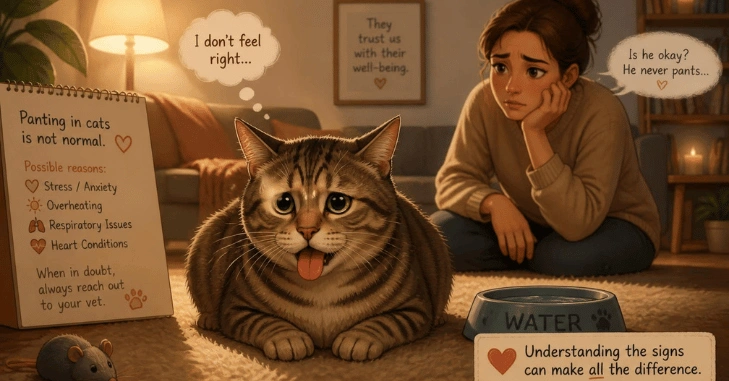
Why Is My Cat Panting? Panting means your cat is breathing rapidly through an open mouth. It can happen when oxygen demand rises, or the body needs to release heat. Cats panting is more concerning.
Cornell describes breathing rapidly as a possible sign of respiratory distress. Common serious causes include asthma, heart failure, and fluid around the lungs. Other causes can include infections, pain, anemia, trauma, or airway problems.
When Panting Is an Emergency
Open-mouth breathing at rest is a strong reason to seek veterinary help. Cornell advises prompt veterinary assessment whenever a cat cannot breathe comfortably. Visible effort can worsen quickly because cats often hide illness until disease becomes advanced.
- Blue, gray, white, or unusually pale gums.
- Collapse, fainting, severe weakness, or poor responsiveness.
- Breathing with the neck stretched forward or elbows held away.
- Strong abdominal movement with each breath.
- Coughing, gagging, wheezing, or noisy breathing.
- Drooling, vomiting, or weakness after heat exposure.
Do not force food, water, or medication during a breathing emergency. Keep movement and handling to a minimum while arranging transport. Call the emergency hospital while traveling when possible, so staff can prepare for arrival.
Common Causes of Panting in Cats
| Cause | Typical context | What makes it concerning |
| Intense exercise | Hard running, chasing, or energetic play | Panting doesn’t stop after rest, so it happens with mild activity. |
| Stress or anxiety | Car rides, veterinary visits, loud events, or unfamiliar places | Breathing remains abnormal after the stressor ends. |
| Overheating | Hot rooms, outdoor heat, enclosed vehicles, or prolonged activity | Drooling, weakness, vomiting, diarrhea, confusion, or collapse appears. |
| Pain | Injury, urinary problems, or severe discomfort | Your cat hides, cries, limps, strains, or cannot settle. |
| Asthma or lung disease | Wheezing, coughing, rapid breathing, or repeated episodes | Open-mouth breathing or visible effort occurs. |
| Heart disease | Rapid breathing, lethargy, weakness, or reduced exercise tolerance | Breathing becomes difficult or rapid while resting. |
| Anemia or other illness | Weakness, pale gums, low energy, or poor appetite | Panting appears without heat, stress, or exercise. |
These causes reflect current veterinary guidance on feline panting and respiratory distress.
Exercise and Overexertion
A healthy cat can pant briefly after unusually intense activity. Stop the game and allow quiet recovery in a comfortable room. Repeated episodes after modest play deserve a veterinary discussion, especially in older cats.
Stress, Fear, and Travel
Some cats pant during car rides, vet visits, or other stressful events. Stress panting should settle after the cat becomes calm and comfortable. Persistent open-mouth breathing after the trigger ends needs veterinary assessment.
For travel planning, keep the carrier secure, ventilated, and protected from heat. Multi-pet households can also review Publishie’s guide to vacationing with your dog for general preparation ideas. Cat-specific travel concerns should still be discussed with your veterinarian.
Heat and Heatstroke
Excessive panting can be a heatstroke sign, especially with drooling or weakness. Cornell recommends moving your cat to a cool, shaded area. Contact a veterinarian immediately because heatstroke can be life-threatening quickly.
Never leave a cat alone in a parked vehicle, even with cracked windows. The ASPCA warns that enclosed cars can become dangerously hot. Persian cats, seniors, overweight cats, and cats with heart or lung disease may have higher heat risk.
Asthma and Other Breathing Disease
Feline asthma can cause wheezing, coughing, rapid breathing, and open-mouth breathing. Cornell notes that attacks can range from mild episodes to life-threatening crises. Respiratory infections, pneumonia, airway obstruction, and chest disease can cause similar signs.
Heart Disease and Fluid Buildup
Heart disease can cause fluid to collect in or around the lungs. Affected cats may breathe rapidly, show effort, or breathe with an open mouth. Cornell identifies hypertrophic cardiomyopathy as the most common feline heart disease.
Heart problems do not always cause coughing in cats. Reduced activity, weakness, or faster resting breaths may be more useful clues. A veterinarian may recommend chest imaging, ultrasound, blood tests, or oxygen support.
What to Do When Your Cat Starts Panting
First, stop exercise and reduce stimulation around your cat. Move them to a quiet, comfortably cool space without forcing movement. Watch whether the mouth closes and breathing returns to an easy pattern.
Next, look at gum color without wrestling or restraining your cat. Healthy gums are usually pink; blue, gray, or pale gums are concerning. If breathing looks difficult, skip home monitoring and go for emergency veterinary care.
If heat exposure is possible, move the cat to a cool area immediately. Cornell advises gently wetting the fur with cool, not extremely cold, water. Do not delay veterinary contact when weakness, drooling, vomiting, diarrhea, or collapse accompanies the panting.
How to Check Your Cat’s Resting Breathing Rate
Count breathing only when your cat is asleep or resting, not when; contactif the cat is purring, grooming, playing, or stressed. One rise and fall of the chest is one breath.
Count chest movements for 30 seconds, then multiply the number by two. The Cornell Feline Health Center lists 15 to 30 breaths per minute as a normal resCount oneCount oneg range. It advises contacting your veterinarian when a relaxed cat repeatedly exceeds 35 breaths per minute.
A number alone does not override visible distress. Open-mouth breathing, marked effort, abnormal gum color, or collapse requires urgent care regardless of the count. Record repeated resting rates if your veterinarian asks you to monitor a heart or lung condition.
What a Veterinarian May Check
The examination depends on your cat’s condition and how stable their breathing appears. A veterinarian may first provide oxygen and minimize stressful handling. Stabilization often comes before extensive testing when respiratory distress is severe.
Testing can include blood work, chest X-rays, pulse oximetry, or heart imaging. These tests can help identify anemia, asthma, pneumonia, heart failure, or fluid around the lungs. Treatment then targets the underlying cause instead of the panting itself.
Can You Reduce the Chance of Future Panting?
Not every cause can be prevented, but routine care can reduce avoidable risks. Keep cats indoors during extreme heat and provide cool water and shaded rest areas. Schedule regular veterinary exams, especially f,oto help preventeventablen heart or lung disease.
Avoid smoke, strong airborne irritants, and exercise during hot weather. Keep travel carriers well ventilated and never leave pets in parked cars. Browse Publishie’s Pets section for more companion-animal guides.
The Bottom Line
Occasional panting can follow intense play, stress, or heat, but cats do not pant routinely. The safest approach is to judge the trigger, recovery, gum color, and breathing effort together. Unexplained open-mouth breathing or any sign of distress deserves prompt veterinary care.
Frequently Asked Questions
Why is my cat panting with their mouth open?
Open-mouth breathing can follow intense play, stress, or overheating. It can also signal asthma, heart disease, pain, anemia, or another breathing problem. If there is no clear trigger, contact a veterinarian promptly.
Why does my cat pant after playing?
Hard play can briefly raise oxygen demand and body temperature. Stop play and let your cat recover in a cool, calm room. Repeated panting after mild activity, or panting that continues, deserves veterinary evaluation.
Why does my cat pant in the car?
Car travel can trigger fear, stress, motion sickness, or overheating. Breathing should return to normal after the cat settles in a safe environment. Persistent panting or any breathing effort needs veterinary attention.
When should I worry about panting?
Worry most when panting happens at rest or without an obvious trigger. Blue or pale gums, collapse, weakness, coughing, or strong breathing effort are emergency signs. Heat-related panting with drooling or vomiting also needs urgent care.
Can a kitten pant after playing?
Kittens can overexert themselves during intense play and may briefly pant afterward. The episode should stop after rest, and normal closed-mouth breathing should return. Recurrent or prolonged episodes should be discussed with a veterinarian.