

Last reviewed: September 3, 2026
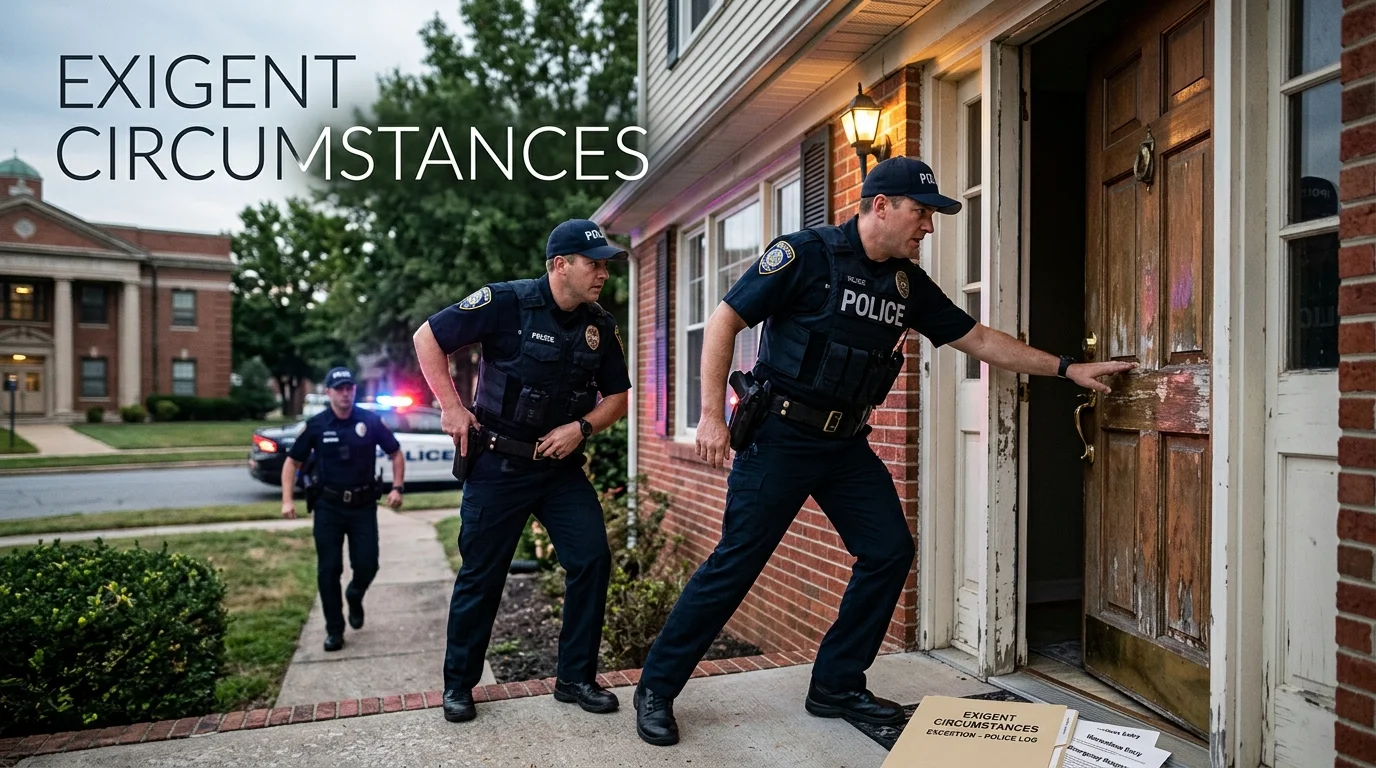
The Fourth Amendment generally protects your home against unreasonable government searches. In U.S. law, exigent circumstances can let officers act without first getting a warrant when waiting would create a genuine emergency. That exception is not a blank check for warrantless police searches.
Police may sometimes enter a home or act without a warrant when an emergency makes delay unreasonable. Common examples include providing urgent aid, pursuing a fleeing suspect, stopping the imminent destruction of evidence, or responding to fire. Courts review the facts known to officers and limit the intrusion to the emergency’s needs.
| Key question | General U.S. rule |
|---|---|
| Normal rule for a home | Police generally need a warrant or a recognized Fourth Amendment exception |
| Common emergency situations | Emergency aid, hot pursuit, imminent evidence destruction, fire, or immediate threats |
| How courts decide | Case by case, based on the totality of the circumstances |
| 2026 emergency-aid rule | Officers need an objectively reasonable basis to believe someone faces serious injury or an imminent threat |
| Limit after entry | Officers may go only as far as reasonably necessary to address the emergency and maintain safety |
Key takeaways
- A home receives especially strong Fourth Amendment protection.
- Urgency must be genuine rather than based on convenience.
- Criminal investigations and noncriminal emergency-aid entries can involve different legal standards.
- A lawful emergency entry does not automatically authorize a general search of the property.
This article provides general U.S. legal information, not advice about any individual case.
What Are Exigent Circumstances?
The phrase describes a group of Fourth Amendment exceptions based on urgent conditions. The central question is whether officers reasonably needed to act before there was time to obtain a warrant.
The Supreme Court has recognized situations involving emergency aid, hot pursuit, imminent destruction of evidence, and burning buildings. Courts do not apply one automatic formula to every case. Instead, they examine the specific facts and the totality of the circumstances.
This distinction matters because legal terms often have meanings that differ from everyday speech. Publishie’s plain-English explanation of malice and its legal meaning provides another example of how context and jurisdiction can change a legal term.
When Can Police Act Without a Warrant?
Several recurring situations can support immediate police action. Yet each category still has limits.
Emergency aid to someone inside a home
Police may enter a home without a warrant when they have an objectively reasonable basis to believe an occupant is seriously injured or faces an imminent threat of serious injury.
The Supreme Court reaffirmed that rule on January 14, 2026, in Case v. Montana. The Court unanimously rejected an attempt to import the criminal probable-cause standard into this noncriminal emergency-aid test. Officers instead need an objectively reasonable basis to believe emergency intervention is required.
That is an important distinction. A crime investigation commonly raises probable-cause questions. A genuine medical or safety emergency is judged on its own emergency-aid standard.
Hot pursuit of a fleeing suspect
Police can sometimes follow a fleeing suspect into a protected area without stopping to obtain a warrant. The seriousness and urgency of the situation still matter.
In its June 2021 decision in Lange v. California, the Supreme Court rejected a rule that would automatically permit warrantless home entry whenever police pursue someone suspected of a misdemeanor. Courts must instead examine the circumstances to decide whether a real law-enforcement emergency exists.
Imminent destruction of evidence
Police may act without a warrant when they reasonably believe evidence will be destroyed before a warrant can be obtained.
The emergency must be genuine. In Kentucky v. King, the Supreme Court also addressed situations in which police conduct contributes to the urgency. The Court held that officers generally do not improperly create the emergency when their preceding conduct is lawful and does not violate or threaten to violate the Fourth Amendment.
Fire and immediate safety threats
A burning building is another established example. Waiting for a judge to approve entry while people or property remain in immediate danger would defeat the purpose of emergency action.
Emergency response also extends beyond criminal law. Publishie’s article on school security and emergency-response trends looks at how institutions prepare for fast-moving safety threats.
What the Warrant Exception Does Not Automatically Permit
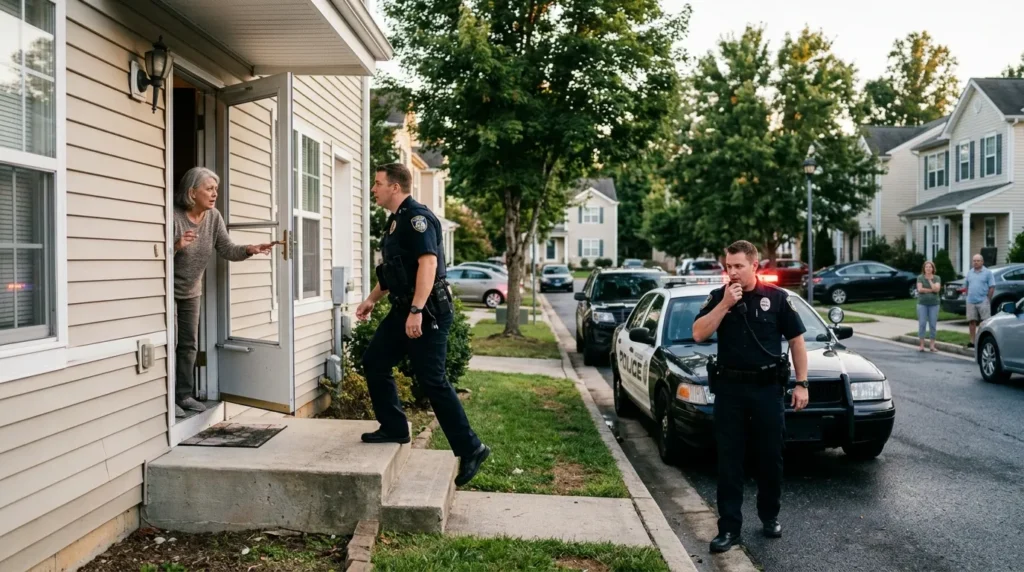
Urgency does not erase Fourth Amendment protections. A useful way to evaluate the issue is to separate the reason for entry from the scope of what happens next.
| Situation | What is not automatically enough | Key limit |
|---|---|---|
| Welfare check | A general desire to check on someone | Officers still need a valid emergency basis for home entry |
| Misdemeanor pursuit | Flight by itself in every case | Courts assess the actual urgency |
| Possible evidence | Mere convenience or speculation | Destruction must be sufficiently imminent |
| Police-created urgency | Unlawful preceding police conduct | Officers cannot rely on their own Fourth Amendment violation |
| Valid emergency entry | Initial authority to cross the threshold | The later search remains limited by the reason for entry |
The Supreme Court made the welfare-check distinction clear in its May 2021 decision in Caniglia v. Strom. It rejected a broad “community caretaking” exception that would give police open-ended authority to enter homes. Emergency aid remains a recognized exception, but ordinary caretaking does not create a general home-search power.
Courts also distinguish inconvenience from necessity. The fact that getting a warrant takes additional time does not alone establish an emergency. Congress’s Constitution Annotated notes that courts look for a compelling need for immediate action when there is no time to secure a warrant.
How Far Can Police Search After an Emergency Entry?
A lawful entry does not necessarily make every room, drawer, container, or device available for inspection. The Supreme Court emphasized this limit in Case v. Montana. An emergency-aid entry does not authorize officers to search beyond what is reasonably needed to handle the emergency and protect officer safety.
For example, authority to enter because someone may be injured does not automatically authorize an evidence hunt after the person is found safe. Further investigative activity needs its own lawful basis, such as a warrant, consent, or another recognized exception.
This focus on scope is one of the most useful ways to understand the doctrine. Courts can separately examine why officers entered, what they knew beforehand, where they went, what they searched, and when the emergency ended.
What Should You Do After a Warrantless Police Entry?
If a warrantless entry or search affects you, avoid physically interfering with officers. A confrontation at the scene is usually not the place to resolve a Fourth Amendment dispute.
If it is safe to do so, you can clearly state that you do not consent to a search. Then preserve information that may matter later:
- Write down the sequence of events while your memory is fresh.
- Note what officers said about the emergency or reason for entering.
- Preserve lawful video, photographs, messages, security footage, and documents.
- Record officer names or identifying information when available.
- Note which rooms or property officers entered or searched.
A lawyer can compare those facts with federal precedent and the law of your state. State constitutions and state courts can provide protections beyond the federal minimum in some jurisdictions.
Publishie’s guide to evaluating an attorney’s credentials and experience discusses practical factors such as relevant experience, licensing, communication, and fee arrangements. Its examples focus on Nevada personal injury law, so legal help for a search issue should come from an attorney qualified in the relevant jurisdiction.
Frequently Asked Questions
They are genuine emergencies that can make waiting for a warrant unreasonable. The doctrine can apply to urgent medical aid, immediate threats, fleeing suspects, evidence about to be destroyed, or similar situations. Whether the exception applies depends on the facts rather than the label police give the incident.
Not under the criminal probable-cause framework addressed in Case v. Montana. For a noncriminal emergency-aid entry, the Supreme Court requires an objectively reasonable basis to believe an occupant is seriously injured or imminently threatened with serious injury.
Investigative searches can involve different requirements. That is why the purpose of the police action matters.
No. Lange v. California held that pursuit of a person suspected of a misdemeanor does not automatically justify warrantless home entry. Courts must look at the particular emergency and all relevant circumstances.
Not merely because the initial entry was lawful. The Supreme Court says an emergency-aid entry is limited to what officers reasonably need to address the emergency and maintain safety. A broader investigation requires a separate legal basis.
The Bottom Line
The Fourth Amendment still makes a warrant the normal safeguard for police entry into a home. Emergency exceptions exist because real dangers sometimes leave no practical time to obtain one.
The key questions are why officers acted immediately, what facts they knew, whether the emergency was genuine, and how far they went after entering. Those details often decide whether a warrantless action was reasonable.
If a search affected an arrest, criminal charge, property seizure, or possible civil-rights claim, speak with a licensed attorney in your state promptly. For more general legal explainers, you can also browse Publishie’s Law section.