
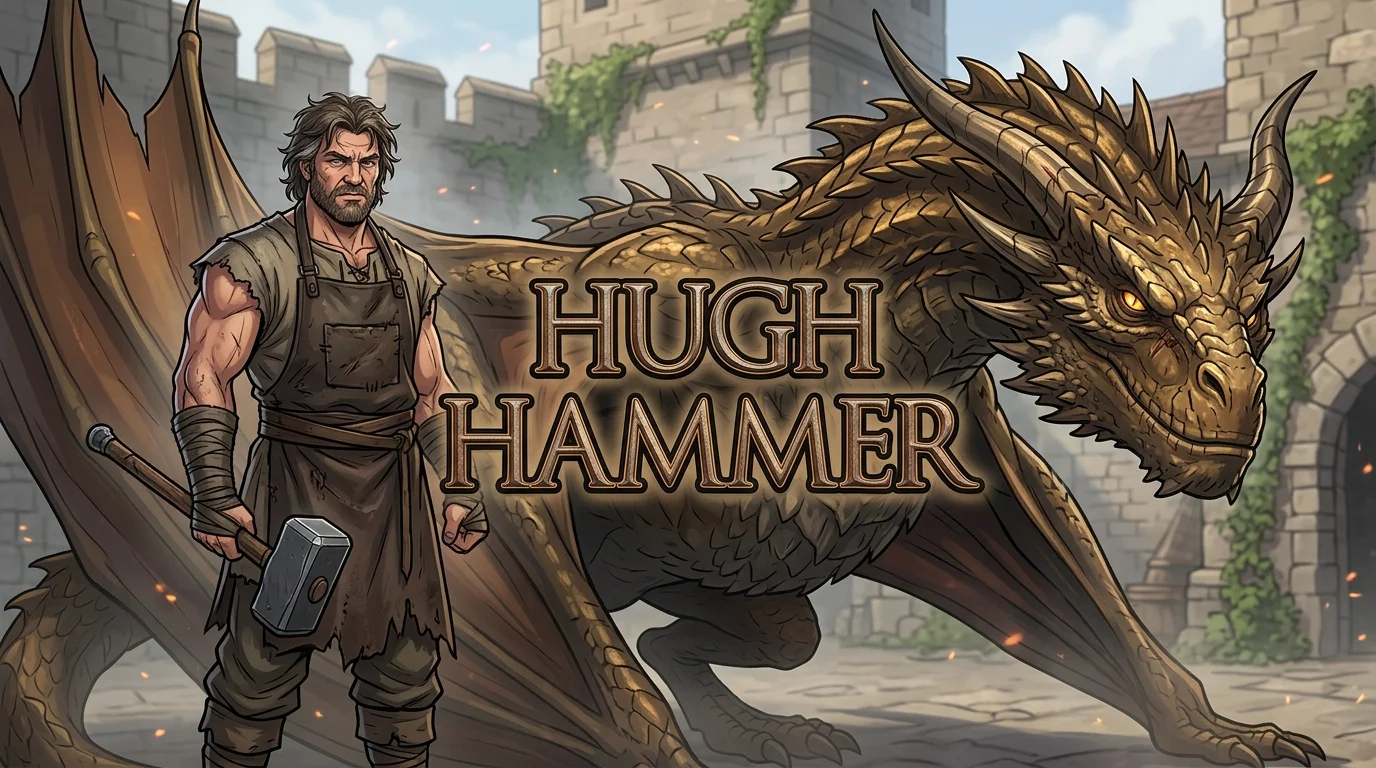
Hugh Hammer is one of House of the Dragon’s most important dragonseeds. He rises from a working blacksmith to Vermithor’s rider during the Targaryen civil war. By Season 3, his choices place him near the center of the conflict.
Direct answer: Hugh is a Targaryen-descended dragonseed who claims Vermithor, one of Westeros’s largest dragons. Kieran Bew plays him in HBO’s House of the Dragon. His television story adds a family, clearer ancestry, and different motivations from George R. R. Martin’s Fire & Blood.
| Key fact | Details |
|---|---|
| Character | Hugh the Hammer, also called Hard Hugh in the books |
| Actor | Kieran Bew |
| Series | House of the Dragon |
| Background | Blacksmith and dragonseed |
| Dragon | Vermithor |
| Vermithor’s former rider | King Jaehaerys I Targaryen |
| Television ancestry | Connected to Princess Saera Targaryen |
| Book allegiance | Blacks, later Greens |
| TV status after Season 3 | Alive |
| Book fate | Dies at Tumbleton in 130 AC |
Who Is Hugh Hammer in House of the Dragon?
Hugh Hammer begins the television story as a blacksmith living in King’s Landing. He struggles to support his family while war strains the capital’s economy. That grounded introduction makes his later rise as a dragonrider unusually dramatic.
The series presents him as a working man before revealing his connection to Targaryen blood. That lineage makes him eligible for Rhaenyra’s search for riders during the Sowing. His successful bond with Vermithor changes his position almost immediately.
His background is also important because he lacks a noble upbringing. Most major riders enter the story with titles, castles, and political connections. Hugh instead reaches dragonback from the lower levels of Westerosi society.
Readers comparing Westeros’s largest dragons can also see Publishie’s Vermithor vs. Vhagar comparison. It covers their size, age, combat experience, and likely advantages.
Why Can He Ride Vermithor?
Dragonseeds are people believed to carry Valyrian or Targaryen ancestry outside traditional royal marriages. Rhaenyra turns to them because several powerful dragons remain without riders. Hugh proves capable of bonding with Vermithor.
The television adaptation gives his ancestry more definition than Martin’s historical account does. In the show, he is connected through Princess Saera Targaryen, King Jaehaerys I’s daughter. That link also creates a striking connection with Vermithor’s previous rider.
The book leaves his parentage far less certain. There, he is primarily identified as a dragonseed and the bastard son of a Dragonstone blacksmith. This distinction is one of several major book-versus-show changes.
What Makes Vermithor So Important?
Vermithor is nicknamed the Bronze Fury and was once ridden by King Jaehaerys I. During the Dance, he ranks among the largest living dragons in Westeros. Only Vhagar clearly exceeds him in size during this period.
Claiming such a dragon instantly gives Hugh military value far beyond his former social position. A blacksmith can be ignored by kings and councils. A man riding the Bronze Fury cannot be treated the same way.
That shift also changes the balance inside Rhaenyra’s faction. Dragonseeds gain destructive power without generations of aristocratic loyalty behind them. Their importance creates opportunities, distrust, and eventually serious political consequences.
For more fantasy and game-related coverage, readers can browse Publishie’s Gaming section. It includes the site’s growing coverage of dragons and related entertainment topics.
Who Plays Hugh in House of the Dragon?
English actor Kieran Bew portrays the character in HBO’s adaptation. His previous screen work includes Warrior, Da Vinci’s Demons, and The Street. He joined the series in Season 2 and remained in the main cast in Season 3.
Bew’s performance helps separate the television character from his harsher literary counterpart. The show gives the blacksmith a wife named Kat and a sick daughter. Those relationships provide personal stakes that the source book never gives him.
The actor also appeared on the official Game of Thrones podcast after Season 3. He joined Tom Bennett and Clinton Liberty to discuss the new dragonriders. Their discussion followed the August 2026 season finale.
How Is the TV Version Different From Fire & Blood?
The largest difference is motivation. Martin’s historical version is tied to ambition, betrayal, and an eventual desire for kingship. The television adaptation spends much more time establishing economic hardship and family loss.
His wife Kat does not exist as his spouse in the book account. The same goes for the sick daughter introduced in Season 2. These additions make his decisions easier to understand through personal grief rather than simple ambition.
The series also gives his ancestry a clearer Targaryen connection. Fire & Blood does not confidently identify his mother as Saera. Viewers should therefore avoid treating every show revelation as identical book canon.
| Detail | TV series | Fire & Blood |
|---|---|---|
| Occupation | King’s Landing blacksmith | Blacksmith’s bastard from Dragonstone |
| Family | Wife Kat and a daughter | No wife or children established |
| Ancestry | Linked to Saera Targaryen | Exact Targaryen ancestry uncertain |
| Dragon | Vermithor | Vermithor |
| Characterization | Family-driven and conflicted | More openly ambitious |
| Tumbleton arc | Significantly changed | Becomes one of the Two Betrayers |
What Happens to Him in Season 3?
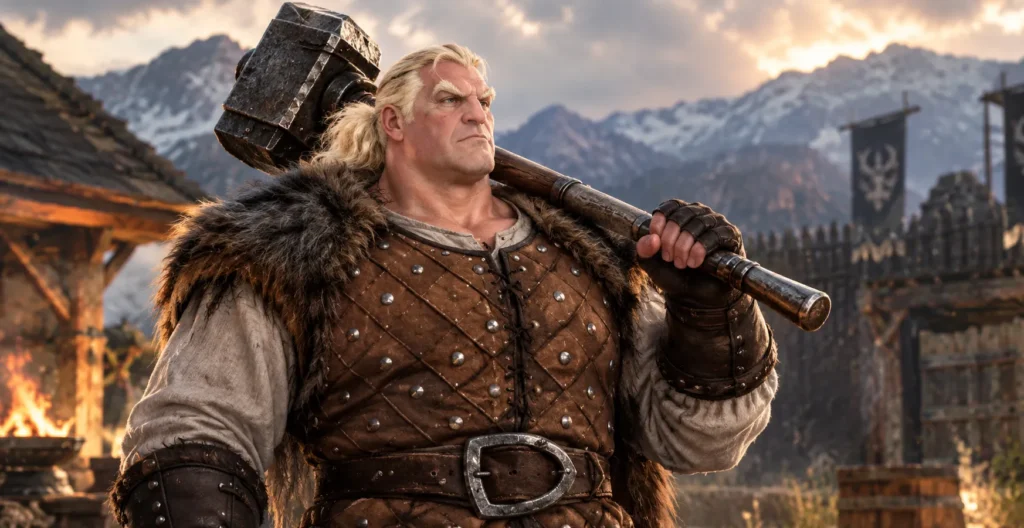
Season 3 pushes the dragonrider toward Tumbleton and places greater pressure on his loyalty. His attempt to reconnect with Kat becomes central to his later choices. The Battle of Tumbleton then complicates his position further.
The show does not reproduce the book’s betrayal in exactly the same way. Contemporary coverage noted that his actions stem from searching for Kat rather than straightforward greed. Showrunner commentary nevertheless framed the finale as a key moment in his betrayal arc.
That change keeps his future less predictable than a direct book adaptation would. Season 3 ends with the character still alive. His eventual path can therefore continue diverging before reaching any familiar destination.
Why Does Hugh Betray Rhaenyra in the Book?
In Fire & Blood, Hugh and Ulf White eventually become known as the Two Betrayers. They abandon Rhaenyra’s side around the First Battle of Tumbleton. Hugh’s growing ambition becomes increasingly important afterward.
The book presents historical reports rather than a modern point-of-view narrative. That structure means readers do not always get a single, clear motive. Accounts can suggest ambition, self-interest, fear, or shifting political calculations.
After changing sides, Hugh begins thinking beyond rewards from existing rulers. He eventually develops his own royal ambitions. That development makes his enormous dragon even more threatening to every faction.
Does Hugh Become King?
The literary character never successfully becomes king. He develops ambitions toward kingship and is sometimes described as a claimant. His plans end before he can establish a lasting reign.
Vermithor makes the idea less absurd than it might first sound. Westerosi power during the Dance depends heavily on access to dragons. A common-born rider controlling such a massive creature suddenly possesses extraordinary military influence.
The series has more freedom because its characterization differs from the source. Season 3 has not simply copied his literary route. Viewers should treat his later book history as a possible framework rather than an exact television roadmap.
How Does Hugh Die in Fire & Blood?
The book places his death at Tumbleton in 130 AC. Ser Jon Roxton kills him before Hugh can secure the power he seeks. His death occurs amid the violent collapse surrounding the dragonseeds and competing armies.
The television adaptation has not reached the same fate. After Season 3, the show version remains alive. Future episodes may preserve, change, or completely restructure his final events.
That uncertainty is now part of the character’s appeal. Book readers recognize the broad danger surrounding Tumbleton. Television viewers can no longer assume familiar events will unfold the same way.
Readers looking for more television, celebrity, and culture coverage can visit Publishie’s Entertainment section. The category contains profiles and other entertainment-focused articles.
Why Hugh Matters to the Dance of the Dragons
His importance comes from his low birth and extraordinary destructive power. The civil war gives someone outside the noble hierarchy access to an elite weapon. That creates a political problem neither side can easily control.
His story also tests the assumption that dragonriders must belong to established royal families. Blood may open the door, but status doesn’t determine who succeeds. The Sowing dramatically widens the pool of people who can change the war.
The television version adds another question about loyalty. Personal suffering can matter as much as titles or factional promises. That focus helps explain why his choices remain dangerous even when they differ from the book.
Frequently Asked Questions
Who is Hugh Hammer?
Hugh Hammer is a dragonseed, former blacksmith, and rider of Vermithor during the Dance of the Dragons. Kieran Bew portrays him in House of the Dragon. The show gives him a more detailed family background than Fire & Blood.
Who is Hugh’s mother in House of the Dragon?
The television series connects his lineage to Princess Saera Targaryen. Saera was a daughter of King Jaehaerys I. The books do not establish the same maternal identity with equal certainty.
Which dragon does Hugh ride?
He rides Vermithor, the Bronze Fury. Vermithor previously belonged to King Jaehaerys I and ranks among the Dance’s largest dragons. That makes him one of Rhaenyra’s most powerful military assets.
Is Hugh a Targaryen?
He is dragonseed with Targaryen ancestry, not a conventional legitimate prince. The show makes that family connection more explicit than the book. His ability to claim Vermithor reinforces his Valyrian heritage.
Does Hugh betray Rhaenyra?
The book version clearly switches sides with Ulf White and becomes one of the Two Betrayers. The television adaptation substantially changes the circumstances surrounding Tumbleton. Season 3 presents a more personal, complicated path to disloyalty.
What to Remember About the Bronze Fury’s Rider
Hugh’s rise captures one of the Dance’s most disruptive ideas. A blacksmith can suddenly gain power comparable to princes after claiming a dragon. Vermithor turns social mobility into a military threat.
The television adaptation makes that journey more tragic and personal than Martin’s version. Family, poverty, grief, and divided loyalty now shape his decisions. Those additions also make his future harder to predict.
For readers following the dragons themselves, Publishie’s Vermithor comparison offers the natural next read. It explains why the Bronze Fury is such a formidable asset. His rider matters because the dragon beneath him can reshape a battlefield.